Shopping Cart
There are no more items in your cart


How to measure wetsuit fit: wetsuit size guide


This wetsuit fit guide explains how to measure wetsuit fit properly, which body measurements matter, how to use a size chart, and what to check before buying so you land on the correct wetsuit size first time.
How to measure for the right wetsuit size
The correct wetsuit size starts with clean measurements. Before you look at any wetsuit size chart, take each body measurement carefully: even a centimetre of slack can break the seal that keeps that thin layer of water at body temperature.
If the fit is loose, that water keeps flushing through.
What measurements do you need for wetsuit sizing?
To measure accurately, use a soft fabric tape rather than a metal one, and stand naturally in underwear only. If possible, get someone to help, as that usually gives you a more reliable chest measurement, waistline and overall body measurement.
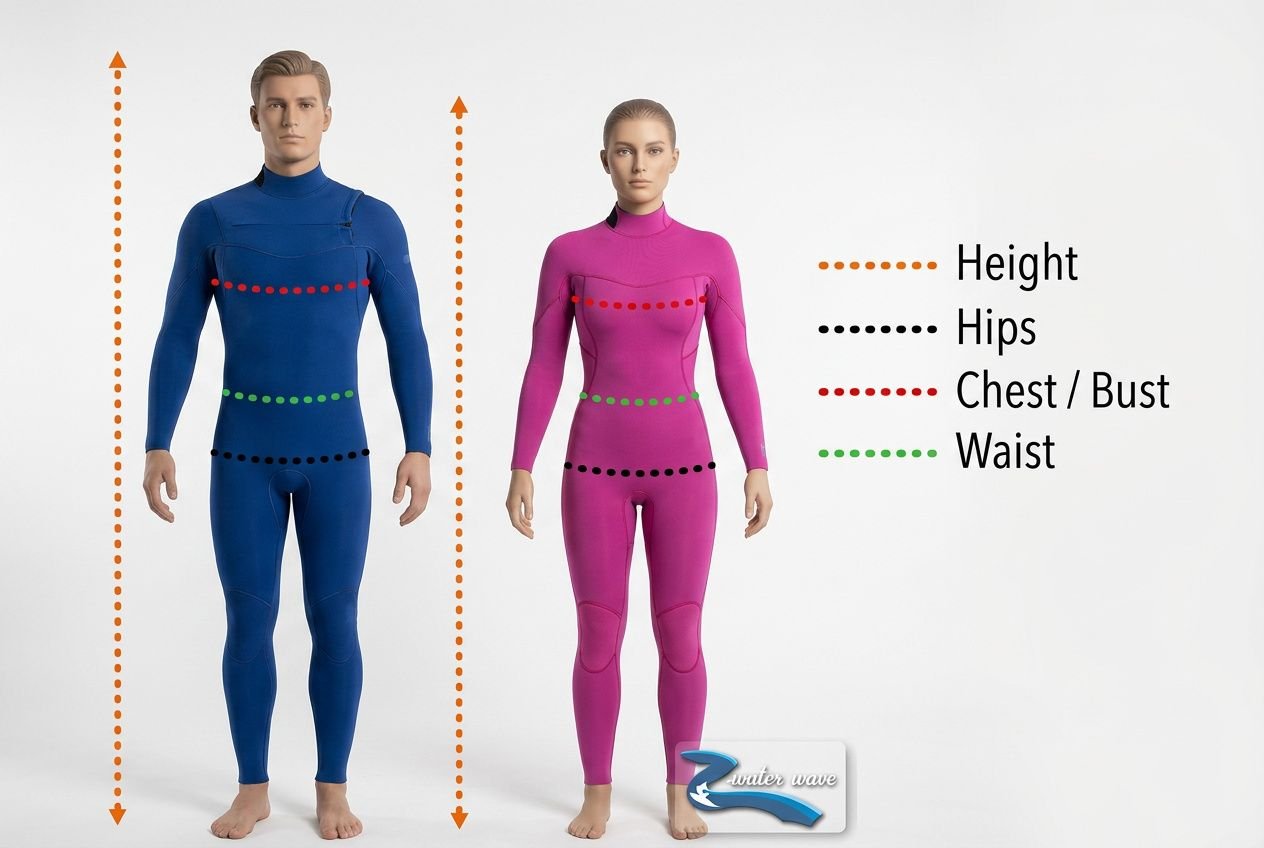
For wetsuit sizing, these are the key measurements to take before using any size guide:
- Height: stand barefoot against a flat wall and measure from the floor to the top of your head. Your height is one of the main references in any wetsuit-size-based comparison.
- Chest: keep your arms relaxed and measure around the fullest part of the chest. For women, take the chest measurement around the fullest part of the bust, just under the armpits.
- Waist: breathe out normally, then measure around your natural waist, usually just above the belly button, with the tape flat but not tight.
- Hips: measure around the widest part of the hips and seat. This is especially useful for women when checking lower-body fit.
Weight ties the whole picture together. In practice, when height and chest point to different sizes, prioritise chest: the suit has to seal your torso and limbs, not just match your length.
How to read a wetsuit size chart accurately
Once you have your measurements, open the brand's own size chart. Wetsuit sizing can vary from one label to another, so a size wetsuit that fits in one brand may not match the same letter size elsewhere.
Bear in mind: clothing sizes are a poor substitute, and a size M in one brand can sit a full size off in another. Mundo-Surf shows each brand's size guide on the relevant product pages, which makes it easier to compare your body measurement against the correct chart.
Below is a standard wetsuit size chart reference using weight and chest measurement:
| Size | Weight (kg) | Chest (cm) |
| Extra Small (XS) | 50–60 kg | 76–84 cm |
| Small (S) | 61–70 kg | 84–92 cm |
| Medium (M) | 70–80 kg | 92–102 cm |
| Large (L) | 80–90 kg | 102–112 cm |
Choosing between two sizes on a wetsuit size chart
Building on that, the difference comes down to the measurements that control the seal most directly: chest and height. If you sit between two options on a wetsuit fit guide, use those first, then check waist and hips as secondary references.
The wetsuit fit guide on Mundo-Surf also explains thickness notation and the '+'symbol, which helps when choosing a size wetsuit for the water temperature you actually ride in.
As soon as you're between two sizes, the right choice when fit is close is usually the smaller one. A snug wetsuit fit eases slightly once wet, while a loose suit stays loose and never seals properly. Short and tall versions are also available in many ranges if your wetsuit size based on chest and weight is right, but the standard length is off.
If you are still unsure how to measure wetsuit sizing, re-check every body measurement, especially height, chest measurement, waist and weight, then compare them again against the brand's size guide.
How to measure wetsuit fit for men
Men’s wetsuit sizing starts with two numbers: chest and waist. Those measurements set the baseline on any size chart, but a good wetsuit fit is confirmed on the body, not on paper.
Key measurements and fit zones for men’s wetsuits
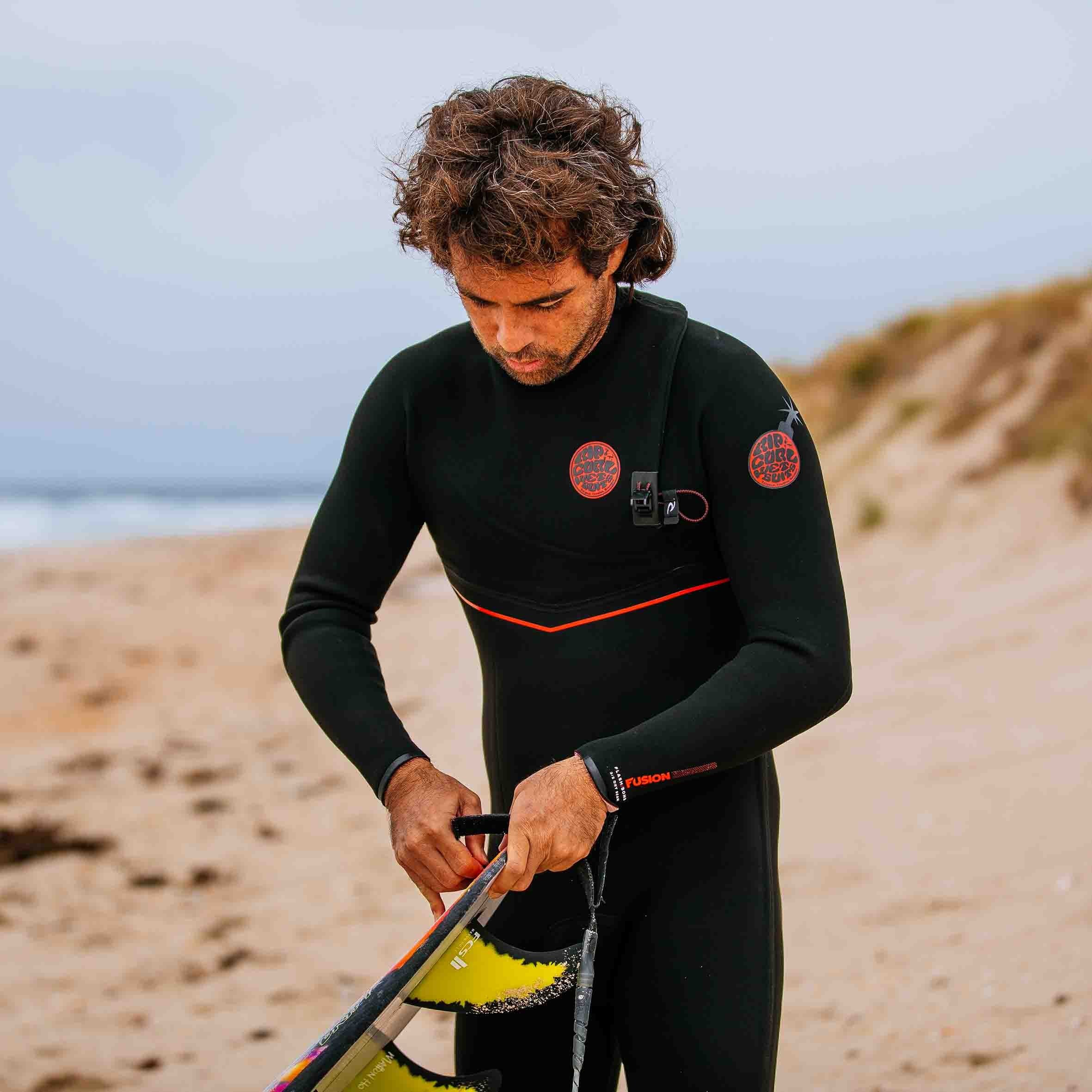
Once you know how to measure wetsuit dimensions properly, the next step is checking the zones that decide comfort, warmth, and movement.
- Lower back: the panel must stay close to the lumbar area; any space there lets cold water through and shortens the session fast.
- Shoulders: lift both arms as if paddling. The collar should stay put, with no digging under the arms, and restricted arm length is a clear sign the upper body cut is too tight.
- Crotch fit: the suit needs to be pulled fully into place here. If it sits low, tension travels upward and makes the chest and shoulders feel tighter than they really are.
Building on that, a fitting wetsuit should let you bend forward, raise your arms overhead, and rotate your torso without binding. In practice, if one of those checks fails, re-measure and compare again with the size guide or look for a different cut in the same wetsuit sizing range.
How to choose a wetsuit men can rely on for warmth
How to choose a wetsuit men can count on comes down to matching thickness to water temperature, then confirming the suit seals at the neck and wrists.
A 4/3 mm surf wetsuit suits year-round surfing in south-west France and Spain, and spring to autumn across much of Europe: the first figure is the torso thickness, the second covers the arms and legs. Mundo-Surf keeps a full range in stock, with fast dispatch from its own warehouse and clear support if you need returns.
By contrast, a loose wetsuit in the correct thickness still performs poorly because water keeps flushing through. The right choice when warmth matters is a suit that fits close without cutting off movement; on the water, that matters far more than the badge on the chest.
Donning technique that affects how a wetsuit fits men
Poor donning technique creates false pressure points: the real issue is not the size, but how the suit was put on.
- Legs first: work the suit gradually up to the thighs, then clear any folds so the ankle panels sit correctly.
- Crotch positioning: bring the suit firmly up into place before lifting the torso section; if not, the shoulders and chest will feel artificially tight.
- Sleeves and wrists: pull each sleeve fully down over the lower arm and wrist, then settle the material into the armpit area to remove false restriction.
- Zip check: once the suit is fully positioned, the zip should close smoothly; if it needs force and the neoprene strains hard across the ribs, the fit is genuinely too small.
Dry try-ons can be misleading because heat and sweat make neoprene stick to the skin. As soon as the suit is in the water, that sensation eases.
How should a wetsuit fit a woman
A women’s suit is built differently. Narrower shoulders, shaped bust panels, and hips cut to sit where they should all affect how a wetsuit should fit, and a men’s pattern throws those seams out of place.
That changes warmth and movement at once. For proper women’s wetsuit fit, start with a suit designed for a woman’s frame: in practice, that is what keeps the seals clean and the neoprene working as intended.

How to measure wetsuit fit for women accurately
That fit starts with proper measurements.
Take bust, waist, and hip measurements before opening any size guide. Height matters too, especially if your proportions sit outside the middle of the chart, because the right choice when comparing sizes often comes from balancing bust with overall length.
- Bust Measure around the fullest part of the chest at nipple-line level with your arms relaxed; this is the primary figure in any women’s wetsuit size guide.
- Waist Measure just above the belly button after breathing out naturally; neoprene stretches more here, so waist is a checkpoint rather than the deciding figure.
- Hips Measure around the widest part of the hips and buttocks; this helps confirm lower-body wetsuit fit, even if neoprene is usually more forgiving in this zone.
Once you have those measurements, compare them with height instead of relying on clothing size. If your upper and lower body fall into different categories, use bust and hips together with the brand’s size finder and size guide to narrow it down. Mundo-Surf’s women’s wetsuit fit catalogue lets you compare brands, thicknesses, and cut styles side by side.
Fit checks every woman should perform before buying
Once the size looks right on paper, the wetsuit should sit snugly on the body. To judge wetsuit fit properly, test real movement: bend to your toes, lift both arms overhead, squat fully, and rotate through the torso.
The suit should fit through each position without crushing the chest or dragging across the lower back. The difference comes down to pressure versus restriction: a wetsuit should sit close like a second skin, tight enough to seal, yet loose enough to paddle and pop up without strain.
Building on that, check the finish points. Sleeves should end at the wrist bone, legs just above the ankle bone, and the collar should let you swallow and turn your head without letting excess water in.
Use the two-finger test at the neck: more than that and the seal is too loose. Worth knowing before you buy, a small fold of neoprene under each armpit, often a raglan gusset, is normal and helps range of motion rather than signalling a poor fit.
As soon as those checks are done, the rule stays simple. It should match your height and key measurements, seal cleanly, and leave full range of motion for paddling and pop-ups.
Wetsuit fit signs and wetsuit size chart tips
How to tell if your wetsuit fit is correct
A good fit feels close. Not crushing. Your size wetsuit should feel compressed without choking, with enough room for a full breath and a deep squat. Dry neoprene always feels firmer at first, then softens in the water, so slight tightness on land is normal.
- Neck seal: the collar sits against the skin all the way round with no visible gap, while you can still swallow and turn your head freely.
- Chest compression: breathing stays comfortable, the zip closes cleanly, and there is no bunching across the ribs. That chest measurement is often the clearest indicator in a wetsuit size chart.
- Lower back and ankles: the lower back stays snug with very little excess material, while cuffs finish just above the wrist and ankle without openings.
After two or three sessions, the neoprene settles further around your shape and feels more natural. On the water, that matters.
Common wetsuit size chart mistakes to avoid
The most common mistake is using a surf wetsuit like normal clothing, when wetsuit sizing follows its own logic and changes from one brand to another. A Medium in one label can match a Large elsewhere, so always use the specific wetsuit size chart for that model.
- Relying on height alone: height helps, but weight shapes the torso and limbs, so both figures must be used together when you measure for a size-based fit.
- Choosing bigger for comfort: a loose wetsuit may feel easier in the shop, but it flushes water through every opening and loses warmth fast.
- Skipping the chest measurement: if your chest measurement sits outside the intended range, the suit can either restrict breathing and circulation or leave empty space where it should seal.
Once those basics are set, check whether the brand offers short or tall versions. That is the right choice when the girth is correct but the torso, arms, or legs run too long or too short. Mundo-Surf places each brand’s size guide and wetsuit size chart directly on the product pages, which makes it easier to compare measurements before you buy.
Building on that, the same logic applies to dry-land comfort. A suit that feels slightly firm at first is often correct, while sizing up too quickly usually creates a loose wetsuit that never seals properly. Worth knowing before you buy: Mundo-Surf offers 100-day returns, so you have time to measure, test the fit, and decide properly.
How neoprene quality affects wetsuit fit over time
Once size is right, material quality changes how quickly the fit settles in. Premium neoprene stretches more from the first session, which makes the suit easier to put on while keeping a close seal. By contrast, entry-level neoprene starts stiffer, then relaxes after a few surfs and moves closer to your body.
The difference comes down to adaptation speed, not sizing logic. Whatever the price point, the wetsuit fit should improve after break-in and the suit should sit close with minimal water exchange.
Frequently asked questions
Is it better to size up or down in a wetsuit?
Go smaller, not bigger. A close wetsuit fit will feel tight when dry, then ease slightly in the water and trap the thin layer of water that keeps you warm.
By contrast, a loose suit lets water flush through the neck, wrists and ankles, so that layer never settles. The right choice when you're between sizes is usually the snugger one, unless the zip will not close or your breathing is clearly restricted.
What measurements do I need to find my wetsuit size?
You need four key measurements: height, weight, chest and waist. For women, add hip circumference.
Building on that, weight is usually the first reference point in a size guide, then chest confirms whether the suit will actually work on your frame. If your chest measurement is over the stated range, the suit can become hard to get on and may limit circulation through the arms.
Take your measurements in underwear with a soft tape, not a metal one.
How do I know if my wetsuit fits correctly without going in the water?
Start with movement. On land, you should be able to touch your toes, lift both arms overhead, squat fully and rotate your torso without the suit binding.
Once that feels right, check the details: the collar should sit flush to the neck, the lower back should stay close to the body, and the chest should feel compressed without stopping a full breath. Sleeve ends should reach the wrist bone, while the legs should finish just above the ankle.
No gaps. No rolls of neoprene. In practice, dry-land tightness is normal; restricted breathing or blocked arm movement means the wetsuit size is off.
Share this article: