Shopping Cart
There are no more items in your cart


Are wetsuits supposed to be tight? How tight should a wetsuit fit


Wetsuits are supposed to be tight, and that first snug feel on dry land is not a flaw.
Are wetsuits supposed to be tight
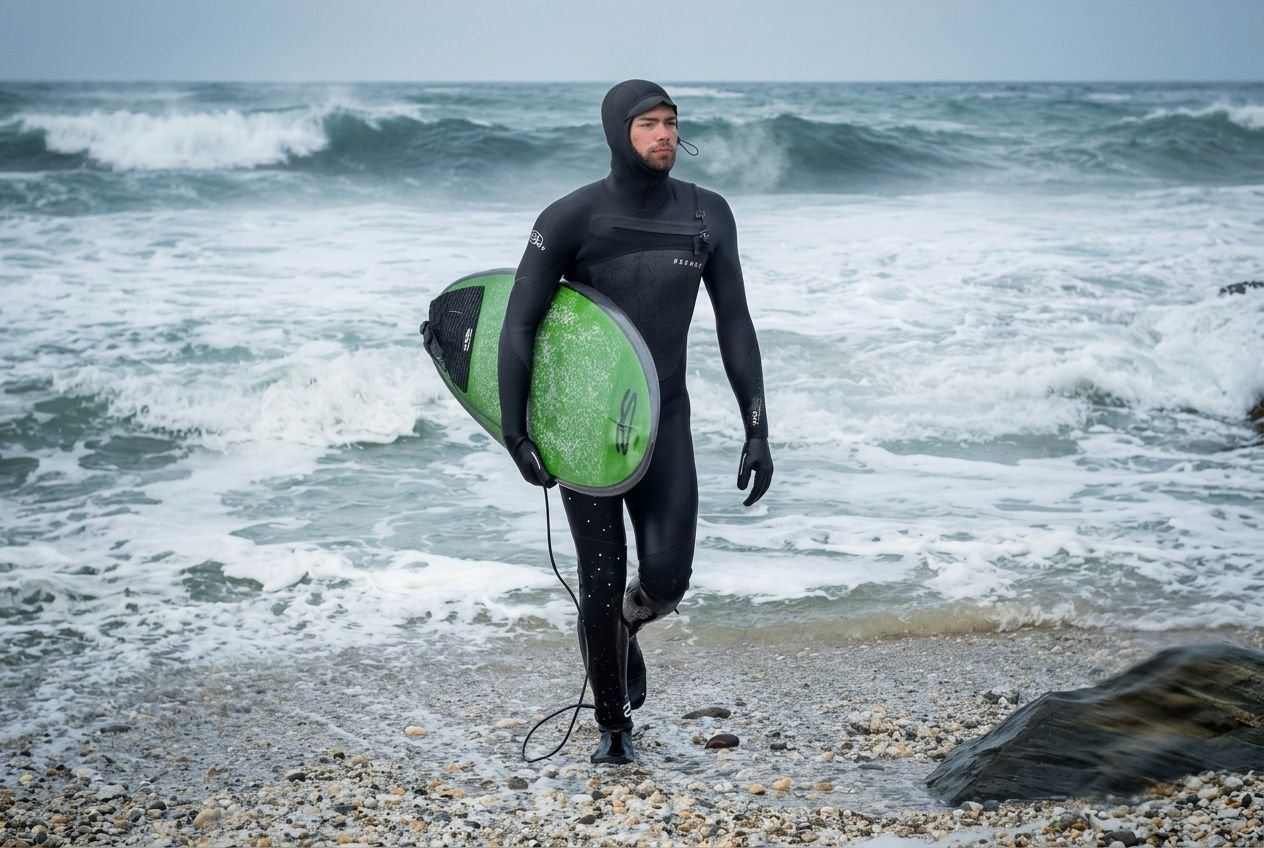
A wetsuit insulates by holding a thin layer of water against your skin, which your body then warms. For that to happen, the neoprene needs close contact all over, especially around the main entry points. So if you are asking are wetsuits supposed to be tight, the answer is yes: a good wetsuit should feel close, supportive and sealed rather than loose.
Why a snug wetsuit fit is essential for thermal insulation
That close contact is what creates the seal. A tight wetsuit limits cold water flushing through the neck, wrists and ankles; clean contact across the panels then lets your body maintain its own heat. On the water, that matters.
By contrast, any extra material around the torso, lower back or behind the knees lets water circulate again and again. That kills warmth fast, even if the suit looks right on the hanger. In practice, the difference comes down to whether the suit matches your body shape closely enough to stay sealed while you move.
How tight should a wetsuit feel on dry land
Building on that, the correct answer to how tight a wetsuit should feel is firmer than most first-time buyers expect. On land, it should feel snug across the chest, shoulders, arms and legs, with steady pressure rather than pain. Some resistance while pulling it on is normal.
Once you are in the water, the neoprene softens and the suit settles. That is why a dry try-on can feel stricter than the real session, especially if heat or sweat makes the lining grip your skin. The right choice when judging size is not whether it feels easy in the shop, but whether it gives you enough comfort, natural breathing and clean mobility without obvious restriction.
Mobility tests to confirm the right wetsuit fit
Once that dry-land feel makes sense, test the suit properly. A good wetsuit fit should stay close while still allowing full movement. If a suit causes sharp pain, pinching, or stops you completing basic actions, it is too small.
- Overhead arm raise: Lift both arms fully overhead and simulate a paddle stroke; you should get full motion without harsh pulling under the arms or across the shoulders.
- Deep squat: Drop into a full squat and hold it briefly; the suit should follow the legs without dragging the crotch down or pulling the shoulders.
- Torso rotation: Turn left and right through a full range; if the chest or back panels clearly restrict rotation, the fit is too small in that area.
- Breathing check: Take several deep breaths; the chest can feel held, but breathing must stay calm and natural.
After two or three sessions, most neoprene relaxes slightly and adapts better to your body shape. Mundo-Surf keeps a broad range in stock with straightforward returns if you need to compare sizes. For a deeper explanation of tight wetsuit fit, this guide is worth knowing before you buy.
Is my wetsuit too tight, signs to watch for
A tight fit is normal. A wetsuit too tight is not. The difference comes down to whether the neoprene still lets you move and breathe normally without the suit starting to restrict you.
A suit can feel close to the skin and still be a good fit; once tightness affects mobility or circulation, the size or cut is wrong for your body shape.
Chest and breathing warning signs of excessive tightness
Start at the chest. In practice, that is where excessive compression shows up fastest: if you cannot take relaxed, full breaths during a dry fitting, the suit is too small.
The zip tells you plenty as well. It should close smoothly when the suit is rolled on properly; if you have to force it, that is not normal snugness but a mismatch in size, and on the water, that matters.
Wetsuit too tight on arms, shoulder and arm mobility issues
From there, look at the shoulders and sleeves. A wetsuit too tight on arms will often trigger sharp pain through the armpits when you lift your arms overhead, and that is a clear sign the suit is starting to restrict rotation and paddle range.
Your arms fatigue earlier; visible pressure lines on the upper arms can also signal compromised blood flow.
When tightness becomes a safety concern in cold water
If the suit reduces circulation or limits breathing, it starts to affect safety as well.
- Numbness and tingling: compression through the arms or legs can reduce blood flow and make it harder to swim safely back in.
- Breathing difficulty: pressure across the chest can make recovery breaths harder in demanding surf.
- Material stress fractures: over-compressed neoprene can crack at stress points and wear out sooner.
As soon as these signs keep showing up, go up a size or switch to a different cut. The right choice when the chest is the only problem area is often not a bigger suit, but a brand shape better matched to your body shape; Mundo-Surf stocks a wide range, which helps when standard sizing does not land right.
Is it better for a wetsuit to be too big or too small
Between those two extremes, a slightly smaller suit is usually the safer bet. Neoprene softens in the water and wetsuits stretch with use, while a loose suit stays loose and loses warmth from the first duck dive. Contact with the skin is what decides it: snug works, oversized does not.
Problems caused by a wetsuit that is too loose or too big
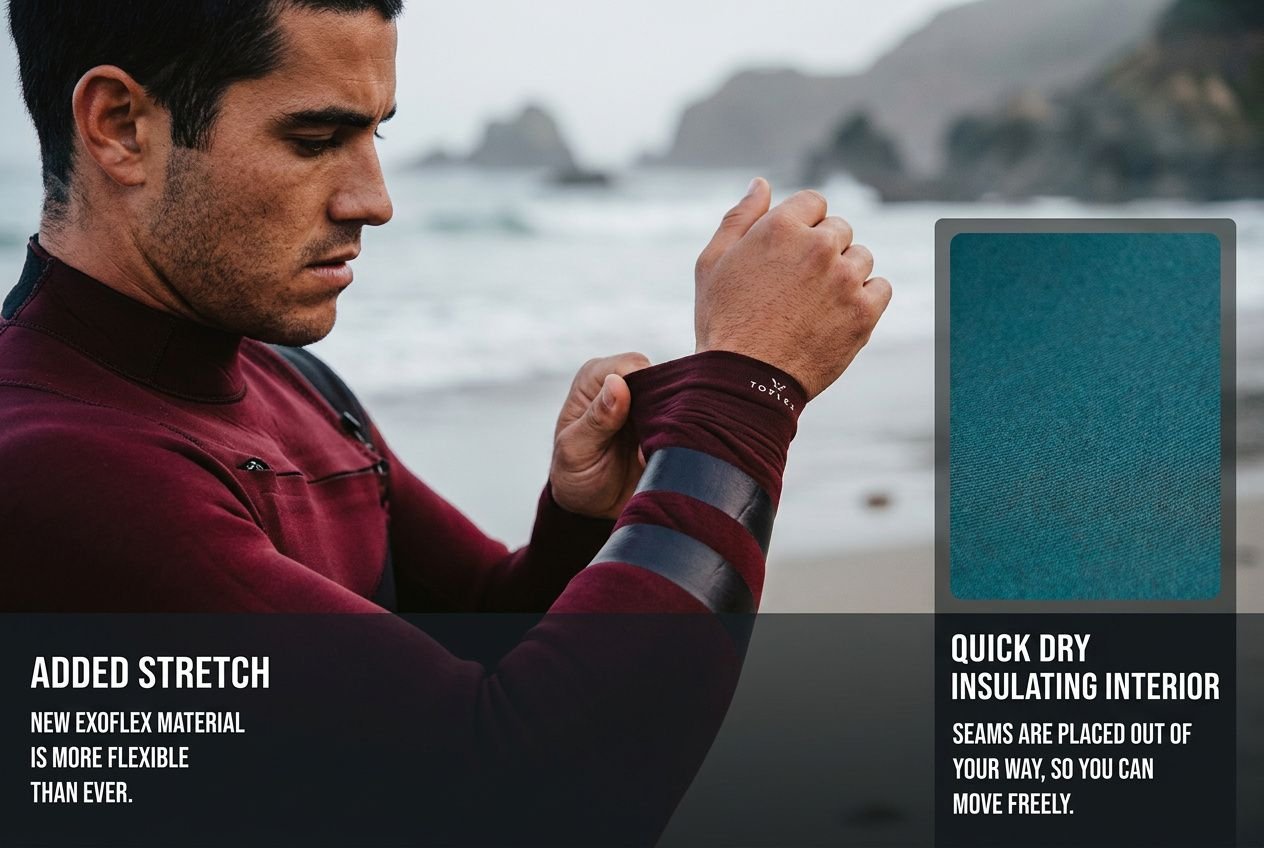
That snug fit matters because a poor wetsuit fit lets water move where it should not. A loose suit leaves gaps at the neck, wrists, ankles and crotch, so cold water keeps circulating instead of warming up against your body. In practice, once that flushing starts, both comfort and heat retention disappear fast.
Building on that, excess material also affects how you move. Water collects in folds behind the knees, under the arms and through the lower back, adding drag and dead weight through each paddle stroke.
- Neck flushing: Cold water entering at the collar runs straight over the torso, causing rapid heat loss.
- Lower back gap: An oversized suit can billow at the kidneys, one of the areas that feels the cold quickest.
- Increased drag: Extra folds of neoprene create resistance in the water and tire your shoulders sooner.
- Shoulder bunching: Loose material under the arms can fill with water and reduce mobility when you paddle.
A suit fits properly only when those weak points are eliminated together.
Why sizing down is usually the right call
The usual reason behind a suit feeling too tight is simple: choosing by height alone. Most brands build wetsuit sizing around weight first, with height used to fine-tune length through the body, arms and legs. The right choice when you sit between two charts is to start with weight, then check proportions.
By contrast, if you are between two sizes in the correct weight band, the smaller one is often the better pick. A fresh suit can feel firm at first, but wetsuits stretch slightly and shape themselves after a few surfs, whereas a large one will keep flushing from day one. That is often the answer to is my wetsuit too tight: not necessarily, provided it does not restrict normal breathing or stop you from moving freely.
A tight wetsuit should feel close, not crushing. You should still have enough mobility to raise your arms, rotate your shoulders and squat without sharp pressure points, and your chest should not feel compressed. If the suit is so tight that breathing is difficult or you cannot move naturally, the wetsuit too tight feeling is real and the size is wrong.
Mundo-Surf offers a wide range of cuts, stock and returns options, so you can compare fits properly and browse the full selection here: tight wetsuit fit.
Does a wetsuit fit if I can barely close the back
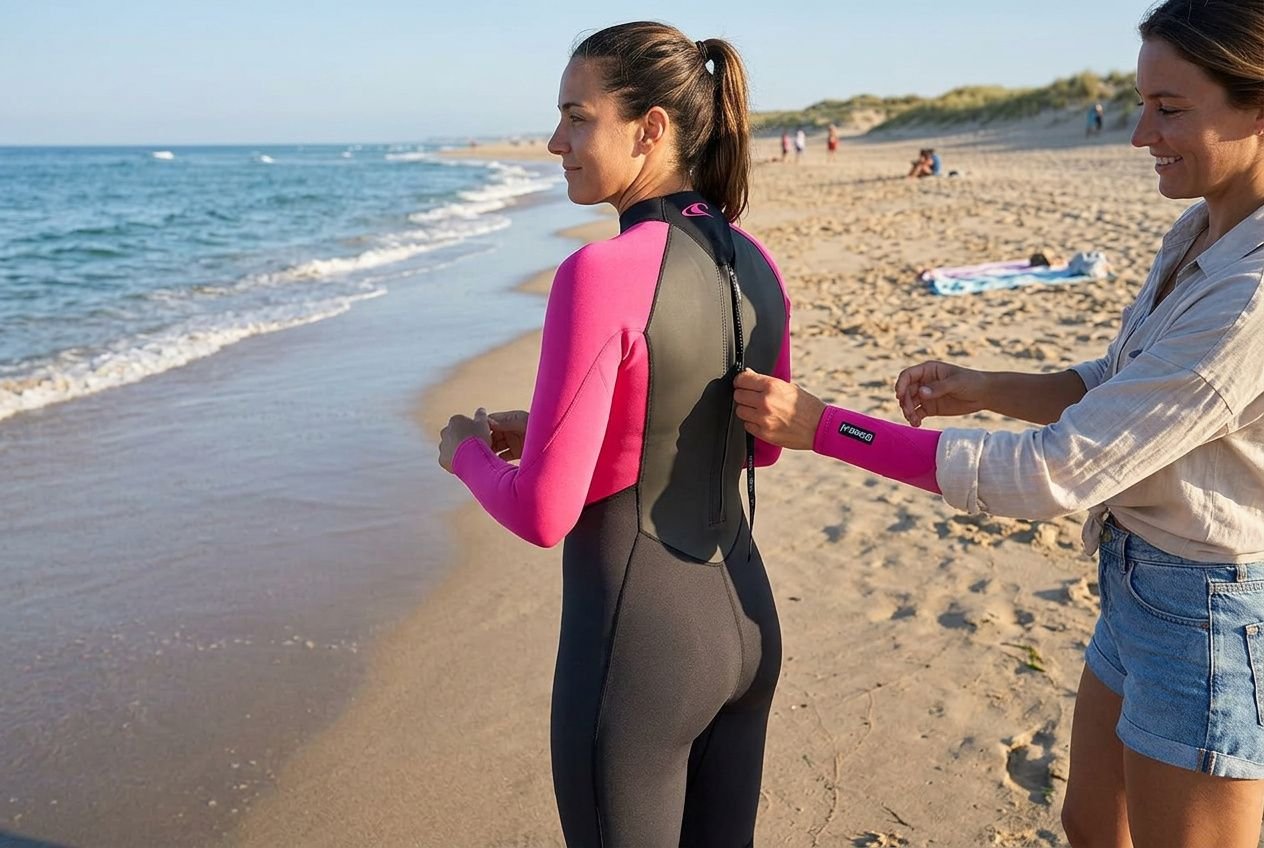
Struggling to close a back zip on a dry try-on does not automatically mean the size is wrong. Returning a suit at that stage can cost you the right fit for the wrong reason.
How neoprene behaves dry versus wet
Dry neoprene behaves very differently from neoprene in the water, and that gap explains most early-fit confusion. If the zip closes with controlled effort and the chest panel sits flat once closed, the suit is probably the right choice when the zip closes with controlled effort and the chest panel sits flat.
On dry skin, sweat and friction make the suit grip more than it will once soaked. As soon as you get in the water, the material loosens, gains flexibility and allows easier movement and breathing.
Once that change starts, the suit will also settle after two or three sessions. In practice, neoprene softens and starts to mould to your body shape, so a dry-fitting wetsuit should feel snug, not easy, and never loose.
Key sealing points to check during a dry fit
That settling only helps if the seal is right in the first place. The neck should sit high on your natural neckline with about one finger of space, while the wrists and ankles should finish a couple of inches above the bone.
From there, the lower back should hug the kidney area closely. If you can pinch and pull the neoprene away there too easily, water will flush through, and on the water, that matters more than a zip that takes effort to close.
By contrast, a good wetsuit fit shows no loose fabric behind the knees or under the arms. Try a duck-dive style move during the fitting: if the neck seal opens into a visible gap, the suit will let cold water in regardless of size or thickness.
When to move up a size despite a tight dry feel
Those sealing checks also show where snug stops being useful. Move up a size when the tight feeling stops being normal compression and starts restricting function.
If you cannot raise both arms overhead, drop into a deep squat or take a full breath once the suit is closed, the wetsuit size is too small. The difference comes down to movement and breathing, not to how hard the zip was to pull.
Once those basics are fine, front-panel wrinkles point to cut rather than pure size. If the chest bunches even though the zip closes and you can move properly, the suit may not match your body shape, and another brand’s pattern may give you a better-fitting wetsuit.
Building on that, for 4/3 mm and 5/4 mm options suited to UK and European waters, check the full wetsuit fit guide at Mundo-Surf.
How to choose the right wetsuit size for your body
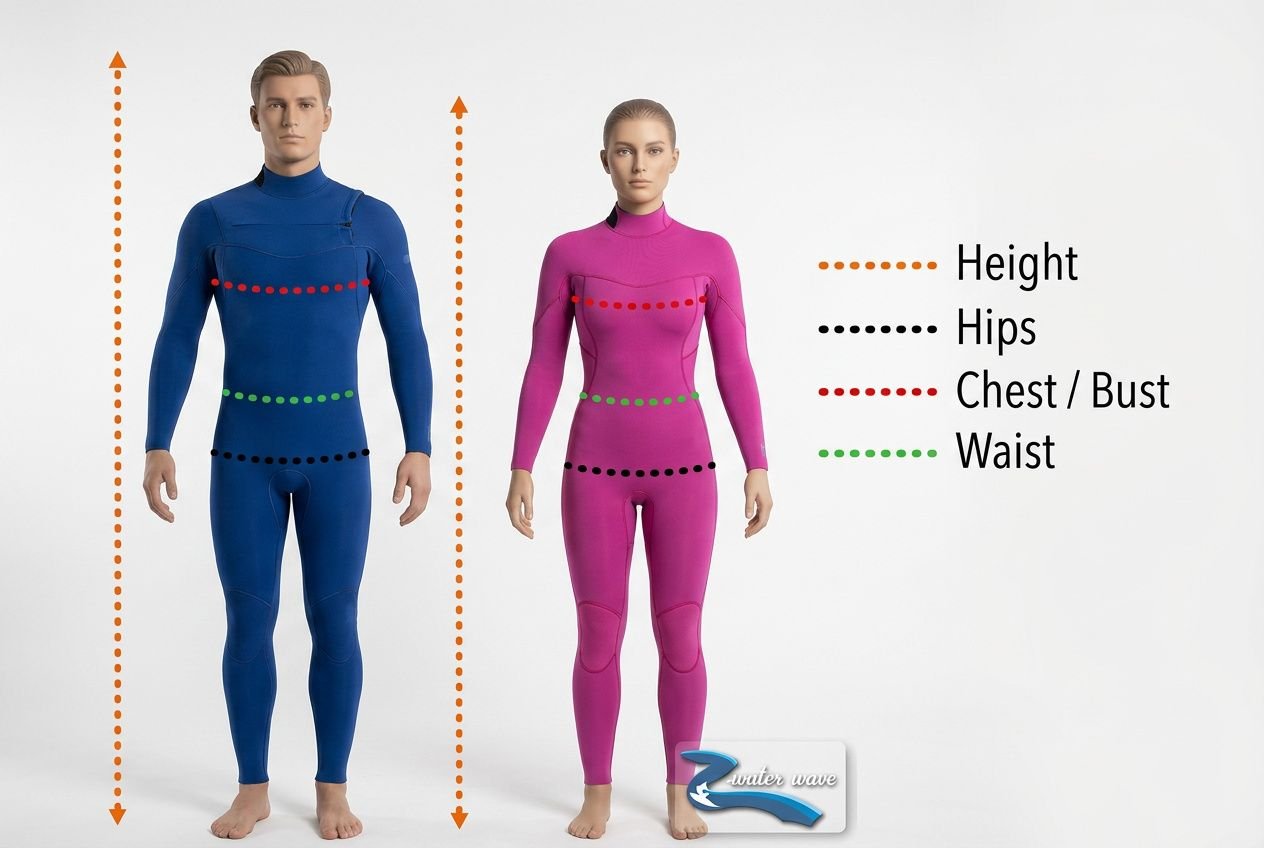
Choosing the right wetsuit size takes more than a quick look at a generic chart. Your weight, chest measurement, height and body proportions all affect wetsuit fit, and each brand cuts its neoprene differently. Get that part right early, and you avoid cold sessions, wasted returns and a suit that starts to restrict you instead of helping you move.
How should a wetsuit fit a woman, sizing specifics
For women, sizing starts with three references in order: current dress size, chest circumference taken across the fullest part, then the brand chart. A women’s-specific cut usually gives a good fit more easily than a unisex model because it accounts for hips, waist and chest shape. On the water, that matters.
Once you have those references, use the larger bracket if your upper- and lower-body measurements fall into two different sizes. Wetsuits stretch with use, so small differences often settle after a few sessions. If you are very tall or shorter than average, short and tall options are worth knowing before you buy: bad suit length breaks the seal at the wrists and ankles, and no amount of pulling will fix that.
| Body measurement | Primary sizing reference | Secondary check |
| Weight | Most important, use brand weight range first | Cross-check against height for suit length |
| Chest circumference | Key for women's fit and chest panel selection | Compare against brand chart to confirm size |
| Dress size (women) | Reliable starting point for most brands | Adjust if between sizes, choose larger |
| Height | Secondary, determines suit length only | Consider short/tall variants if at extremes |
Using brand size guides to find your perfect fit
Once the basics are clear, the difference comes down to the brand chart. One label’s medium can feel very different from another’s because panel layout, lining and stretch all change how the suit sits on your body. Always check the specific guide before buying if you want a properly fitting suit rather than guessing from a number alone.
- Prioritise weight: use the brand’s weight range first, because it is usually the best single guide to overall suit volume and size.
- Measure chest circumference: match it to the chart to confirm torso fit, especially if you are close between sizes.
- Check length options: if your height sits at the edge of a bracket, short or tall versions can keep the cuffs and ankles in place and preserve the seal.
When two sizes still look close, go smaller. That is often the right choice when the suit feels firm on dry land but still lets you bend, twist and paddle without harsh resistance. A fresh suit should feel close, not roomy, because neoprene relaxes after use and a proper wetsuit fit should become more comfortable, not looser than intended.
Final fit checklist before buying a wetsuit
Building on that, confirm the fit before you commit. A careful dry-land check catches most mistakes before the first session. Build on that with the knowledge that Mundo-Surf offers 100-day returns if the suit still is not right once you are in the water.
- Neck collar: it should sit high on the natural neckline with one finger sliding under it, snug enough to hold a clean seal without making the suit restrict your head turn.
- Chest and breathing: the torso should feel firm, but breathing must stay steady and natural, with no bunching across the chest when the zip closes.
- Arms and shoulders: raise both arms overhead, then mimic a paddle stroke; you want full mobility without numbness or sharp pull under the arms.
- Lower back contact: if you cannot easily pinch the suit away from the kidney area, that is a strong sign the wetsuit fits properly.
A wetsuit should be tight, yes, but not to the point where it cuts off breathing or seriously restricts your stroke. The aim is firm contact all over: enough compression to stay warm, and enough freedom to move naturally. As soon as those checks line up, you know you have a comfortable suit with the right fit for real surfing, not just the changing room.
Frequently asked questions
Should a wetsuit feel tight when you first try it on?
Yes. A wetsuit should feel snug when you try it on dry, because dry neoprene is firmer and less flexible before it hits the water.
Once immersed, the material softens, follows your shape better, and gives you more freedom of movement. In practice, a suit that feels firm and takes effort to pull on is often the right size, while one that makes breathing difficult or blocks a simple arm move is too small.
A good wetsuit size should feel snug rather than easy on land. If it feels genuinely uncomfortable or starts to restrict normal motion, it is too tight.
Is it better to size up or down in a wetsuit?
Building on that, sizing down is usually safer than sizing up. A wetsuit with a proper close fit will relax slightly in the water, whereas a suit that already feels comfortable and a bit loose when dry often ends up too big once wet.
The difference comes down to water flow: extra space at the neck, cuffs, or lower back lets cold water circulate and strips heat fast. The right choice when you want warmth and lasting comfort is a suit that fits close without limiting your range.
Do wetsuits loosen up once they get wet?
As soon as the neoprene gets wet, it becomes more elastic and less rigid, so the suit feels easier to wear almost straight away.
Once that first session is done, the same logic applies over the next two or three surfs: the material settles, softens, and adapts more closely to your body. On the water, that matters, because a well-fitted suit will feel less restrictive with use without turning sloppy.
Recommended products
Share this article: