Shopping Cart
There are no more items in your cart


How to measure surfboard fin size: a complete guide


Learning how to measure surfboard fin dimensions properly saves you from expensive sizing mistakes and lets your board work the way it was shaped to. This guide covers the key measurements: fin depth, base, rake, foil, and the practical points that help you match a surfboard, a fin setup, and the conditions. Browse Mundo-Surf's full surf fin selection to compare your measurements with current stock.
How to measure surfboard fin depth and height
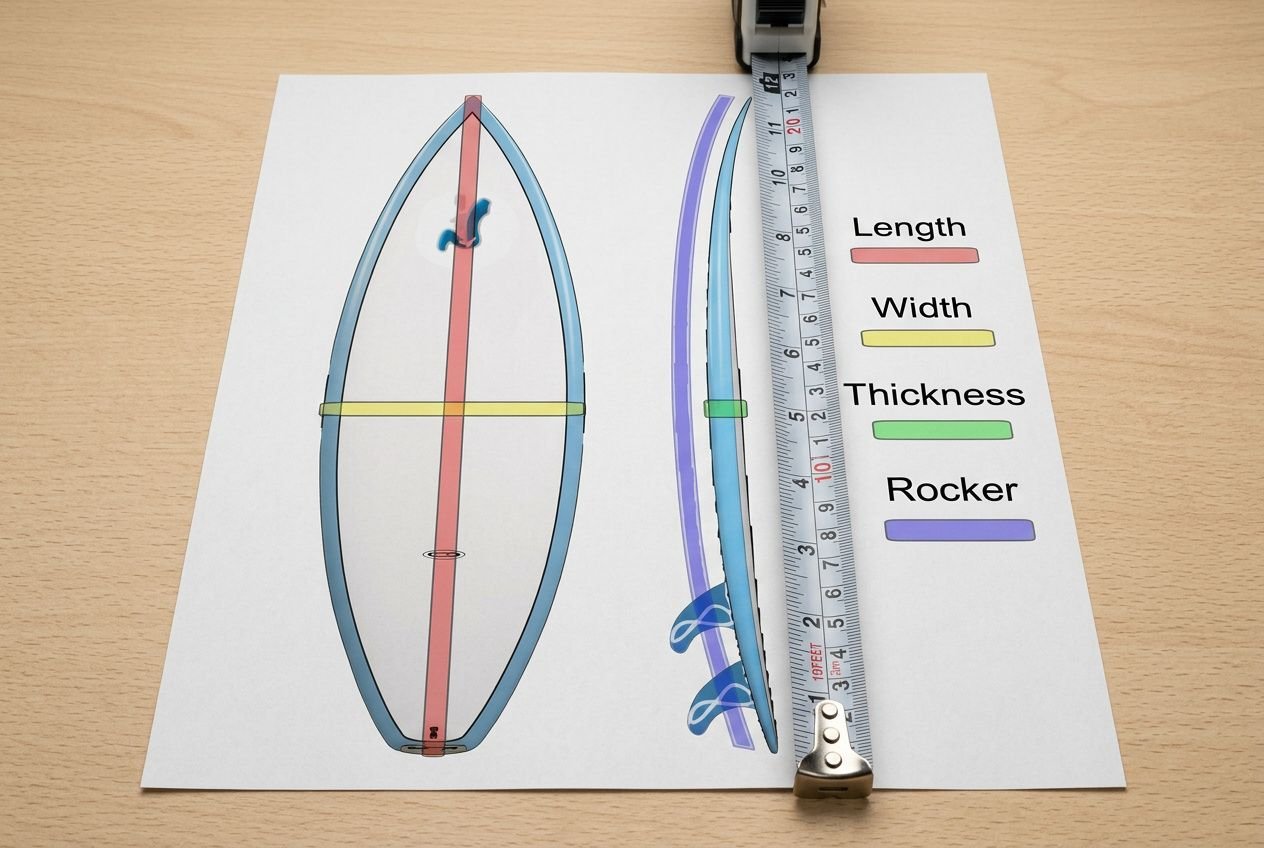
Start with fin depth. If that number is off, the rest of the fin configuration becomes harder to judge. Whether you ride a single, a thruster or a quad setup, in practice this is the reference measurement every other dimension is read against.
Why fin depth matters for performance
Fin depth tells you a lot about hold. A deeper fin grips the face harder and adds directional stability in stronger surf, while a shallower fin releases sooner and feels looser from rail to rail.
Building on that, the difference comes down to how much surface area works through the water. More depth usually means more resistance and a more anchored tail, which is why a longboard fin or a large single fin setup will normally carry more depth than small fins in a shortboard fin setup. The same logic applies to a centre fin compared with rear fins in a quad fin configuration.
Step-by-step guide to measuring fin height
Lay the fin flat, then measure in a straight line from the tip to the lowest point at the base tab, the section that fits into the board. That figure is the fin depth brands usually publish on their size charts.
Once that is clear, a common guide is easy to remember: a 9-foot board often pairs with a 9-inch fin. Worth knowing before you buy, that remains a starting point rather than a rule, because rider weight, wave type, and fin template all pull the final size in different directions.
- Start at the tip Place the zero mark of the ruler on the very tip of the fin and keep it square to the base.
- Measure to the base Read the figure at the lowest edge where the fin meets the board: that is your fin depth.
- Record both units Note inches and centimetres, as brands do not all present specs the same way.
As soon as you have that number, compare it with your board length and body weight. Mundo-Surf lists dimensional details on product pages, including many common fin models in FCS and Futures, so checking compatibility is quick.
Fin size categories by height explained
Small fins usually measure about 2 to 4.5 inches (5–11.4 cm). They cut drag, feel lively, and suit smaller surf. Medium fins fall between 4.5 and 5.5 inches (11.4–14 cm), giving you a balanced blend of stability and response suited to average build and waist-high surf.
By contrast, large fins generally run from 6 to 10 inches (15.2–25.4 cm) and favour hold and control. That makes them the right choice when you are heavier, the waves are softer, or the board needs a bigger centre fin, as on a longboard fin or a classic single. Front fins and rear fins in a thruster or quad setup more often sit in the small-to-medium range, depending on the fin template, rake, and foil.
Measuring the fin base for drive and control
Once your fin depth is set, the next number to check is the base: the bottom edge of the fin that sits against the surfboard. That measurement directly affects drive, acceleration through turns, and how the fin setup works with your board shape and tail width.
How to measure the base of a surfboard fin
For a clean fin base measurement, place the fin flat and measure straight along the bottom edge from the front corner to the rear corner where it contacts the board. Use the widest point of the base, because that is the figure that affects drive and fit with your box or fin system.
- Front corner: Start at the leading edge where the fin meets the board, keeping the ruler or tape flat against the base.
- Rear corner: Measure to the trailing edge at the board-contact point, without following the curve higher up the fin body.
- Tail width correlation: A wider-tail surfboard usually needs a broader base for balanced drive, while a narrower tail tends to suit a shorter base.
- Record precisely: Note the measurement accurately so you can compare fins properly and match them to your setup.
Building on fin depth, the base helps define total fin area. More area brings extra hold and resistance through the water; less area feels faster, looser, and easier to release off the wave face.
How base size affects speed and turning
A longer base gives the fin more leverage when you load a turn. The result is stronger drive, more projection, and better speed out of the bottom turn. A shorter base loosens things up, so the tail comes around more freely and tighter direction changes feel easier.
Once you move onto a fish or retro board, the wider tail usually asks for more base to spread that influence across the tail block. By contrast, a narrower shortboard tail tends to work better with a more compact fin, where quick pivots matter more than drawn-out projection.
That carries through to a thruster layout as well. The centre fin plays the biggest role in control, and its base helps decide how planted or how free the tail feels. In practice, the difference comes down to how that centre fin works with the side fins, the tail shape, and the amount of hold you want through the turn.
Understanding fin rake, sweep and cant
You already know depth and base set a fin’s size. Building on that, add the two critical angles: fin rake and cant. Together they dictate how your board pivots, tracks, then releases as you exit the turn.
How to measure fin rake accurately
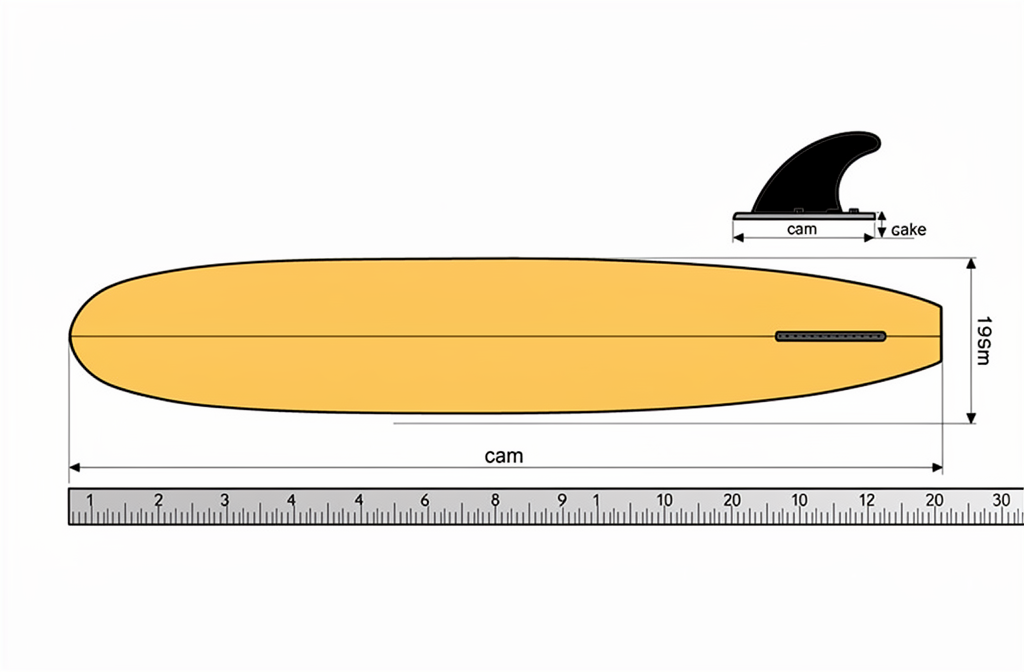
Starting from the leading corner of the base, draw one line along the base and a second up to the tip: the meeting point gives you the fin angle. Read it with a protractor and you have the exact fin rake. A laid-back outline with more rake smooths drawn-out carves on powerful walls, whereas an upright template gives you quicker pivot in weaker peaks.
How cant affects single fin and side fin performance
By contrast, cant measures the outward lean from the deck. Zero cant on a centre fin or single keeps the board driving straight ahead; add a few degrees on your side fins in a thruster or quad setup and the rail engages sooner. More lean tightens your arcs; the trade-off is drag. Less lean, by contrast, frees up straight-line speed.
Recommended products

Fin foil types and sizing by surfer weight
Once depth, base, rake, toe and fin angle are set, two things finish the picture: fin foil and rider weight. They decide how cleanly water moves around the fin, and whether that fin size really matches the force you put through the board. You will not measure either with a tape, yet both become obvious as soon as you are on a wave.
What is fin foil and why does it matter
Fin foil is the cross-sectional shape of a fin. It affects lift, speed and release by controlling how water wraps around the profile from base to tip.
- 50/50 foil: symmetrical on both faces; standard for a centre fin and for a single fin setup, where equal lift on each side helps the board track cleanly.
- 80/20 foil: more curve on the outer face; used on side fins to create directional lift towards the rail, common in thruster and quad setups.
- Flat inner foil: flat on the inner face and curved on the outer; gives stronger directional lift and suits side fins when toe and fin angle are already dialled in.
A single fin works best with a 50/50 foil for neutral tracking. By contrast, side fins in a multi-fin setup benefit from an asymmetric foil that pushes water outward and builds drive through turns.
Fin size guide based on surfer weight
Once foil is sorted, fin sizing by weight becomes the main reference point. Most brands use rider weight before board length, because your weight sets the load placed on each fin during turns. If the size is too small, the board feels washy and lacks hold, no matter what the rake, base or foil says on paper.
If you sit between two sizes, the difference comes down to feel and conditions: smaller for a looser response in weaker surf, larger for extra hold in more powerful waves. In practice, Mundo-Surf lists full specs across its range, which makes comparing fin sizing by weight easier before you buy.
| Size | Surfer weight | Recommended use |
| Extra Small (XS) | Under 55 kg / 121 lbs | Small, weak waves; maximum looseness |
| Small (S) | 50–70 kg / 110–154 lbs | Small to medium waves; agile response |
| Medium (M) | 65–80 kg / 143–176 lbs | All-round use; balanced hold and pivot |
| Large (L) | 75–90 kg / 165–198 lbs | Medium to powerful surf; strong drive |
| Extra Large (XL) | Over 90 kg / 198 lbs | Powerful surf; maximum hold and stability |
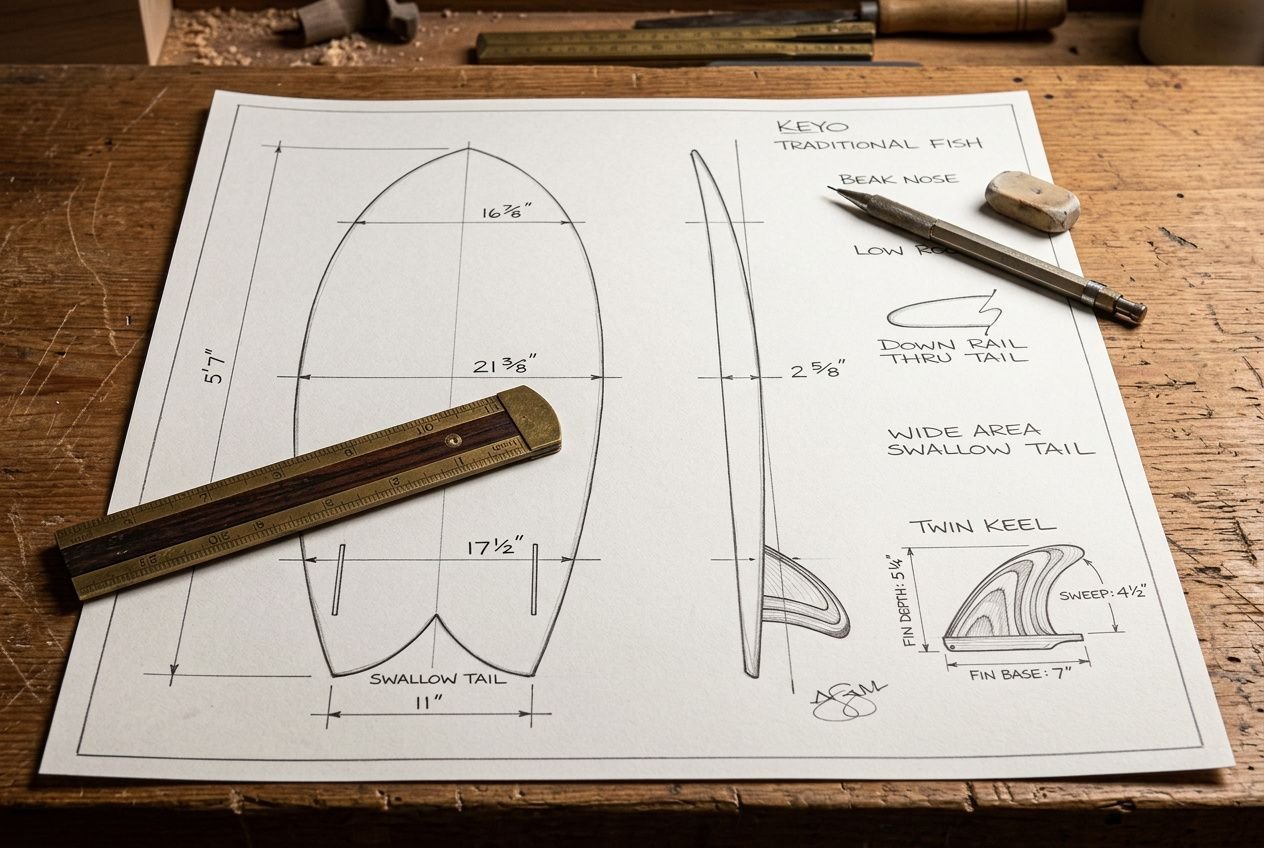
How to measure twin fin dimensions for your surfboard
Getting the numbers right starts with depth, base and rake. Twin fins sit closer to the rails, so even a 2 mm shift in placement alters speed and carve noticeably. In practice, that placement turns small measurement tweaks into big changes in speed and flow on a retro fish or any two-fin setup.
Measuring height, base and rake on twin fins
That rail-biased placement is why clean measuring matters. Use a straight ruler for depth and base, then bring in a protractor for rake. Twin fins tend to show a broader base-to-height ratio than a thruster fin, adding the drive a classic fish surfboard needs.
- Depth: tip to tab, same method as other fins; shallower profiles favour release yet keep hold if the base is wide enough.
- Base: measure the longest edge against the board; extra width feeds sustained glide in fuller tails.
- Rake: place the protractor at the leading-edge corner; moderate angles steady the line while still letting you draw lengthened arcs.
Once those three numbers are clear, comparing models gets easier. Mundo-Surf holds a broad quiver of twin surf fins from FCS, Shapers, Feather and Komunity. Check each model’s sheet for twin fin measurements before locking in your order; the difference comes down to a few vital millimetres.
Choosing the right twin keel fin size
With those measurements in hand, twin keel sizing becomes more precise. Twin keel fin sizing links rider weight with tail width. A fish’s broad tail asks for a large base to keep drive balanced across the whole rail, whereas a smaller base makes the board skittish once the pace climbs.
Building on those preset dimensions, the MS twin keel fins give you a concrete baseline when comparing base, depth and rake across competing twin fin models. They come glass-on ready: fibreglass and resin with a matte finish, preset dimensions, twin keel fin sizing done for you. On the water, that matters.
Frequently asked questions
How do I know what fin size I need for my surfboard?
Start with your weight. That is still the main reference brands use when they set a fin size chart for a surfboard.
Once you have the right size bracket, compare the fin depth with your board length: as a rule of thumb, fin height in inches should sit close to board length in feet. Building on that, use tail width to judge the right base, then look at wave type to choose the fin rake and overall fin shape. Mundo-Surf lists the full dimensions, base, depth and rake, on every product page.
What is the difference between fin rake and cant?
The difference comes down to two separate angles. Fin rake measures how far the tip sweeps back from the base, while cant measures how far the fin leans outward from the board.
A fin with more rake holds a longer line and suits cleaner, more powerful waves. By contrast, a more upright template releases faster and suits tighter direction changes in weaker surf. A centre fin runs with zero cant for neutral tracking, while side fins use outward cant to make the board react more freely.
Do twin fins require different measurements than other fins?
The measurement method stays the same across any fin type: base, fin depth and rake are taken in exactly the same way.
Once that is clear, twin keel designs usually carry more base for their depth, which gives that drive-heavy feel. Their placement closer to the rail also makes rake, cant and the overall fin shape more noticeable underfoot. Check the listed specs on each model, because FCS, Shapers, Feather and Komunity do not all use the same numbers.
Share this article: