Shopping Cart
There are no more items in your cart


Why is my wetsuit so hard to put on? Tips to get in easily


If you've ever stood in a car park wrestling your wetsuit over your calves, you're not alone, and you're probably not doing anything wrong. A wetsuit that feels tight on dry land is not a defect. It is part of how wetsuits are designed to work, and for more detail on what a tight wetsuit fit should feel like, Mundo-Surf has a dedicated guide worth knowing before you buy.
Why is my wetsuit so hard to get on
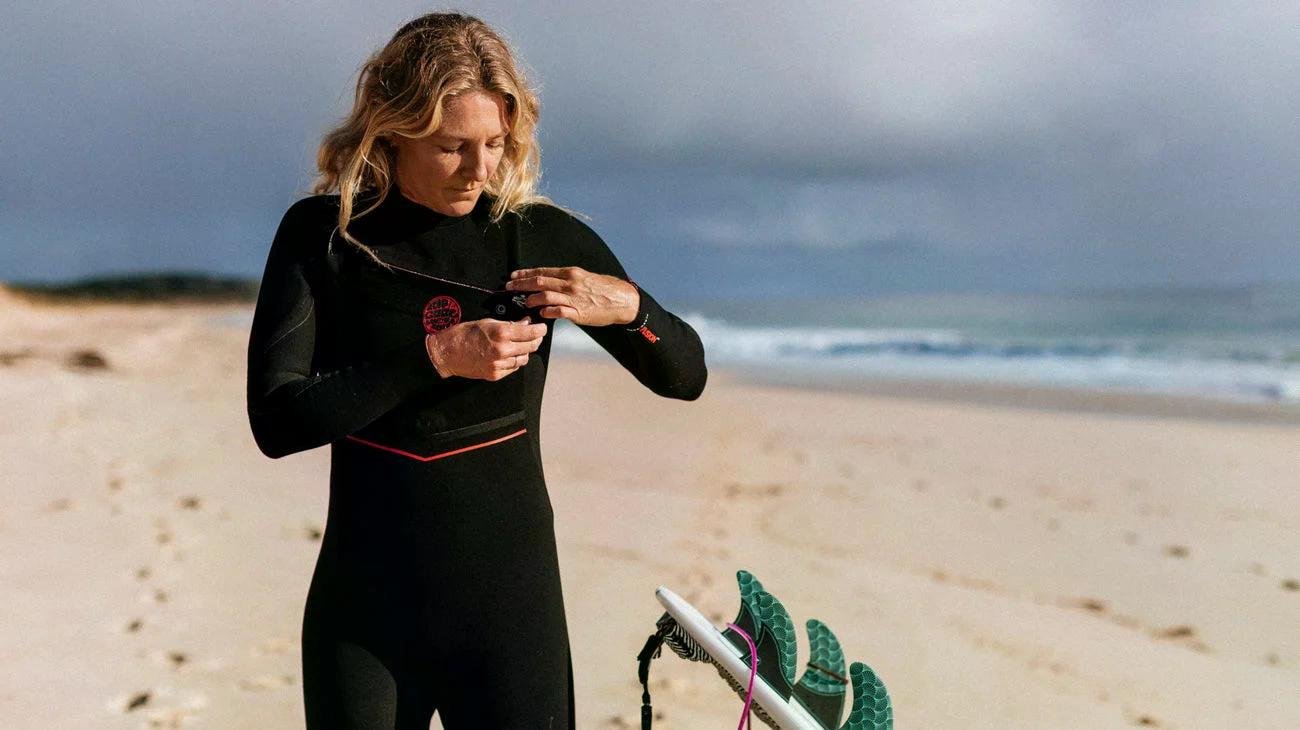
That dry-land tightness comes from the material itself. Neoprene feels stiffer when dry, and a new suit adds more resistance because the material has not softened yet. Warm skin, a bit of sweat, and friction from the inner lining can also make the whole thing feel more restrictive than it will feel in the water.
Neoprene stiffness and how it behaves when dry
- Dry stiffness: neoprene firms up without water, so the suit can feel much smaller before you get in.
- Skin friction: warm or damp skin grabs the lining during a dry try-on, which is a big part of why the dressing struggle comes up so often.
- New material resistance: fresh neoprene has not been broken in, so the first few sessions are nearly always the hardest.
- Performance fit: wetsuits are designed to sit close to the body, and more performance-focused models are often harder to pull on correctly.
That same logic applies to better materials. A suit built with more flexible panels can stretch more easily from day one while still sealing properly. The flexible wetsuit material used in the Hurley Plus 4/3mm Total Eclipse is a good example: Superstretch Neospan neoprene and Xtend 2.0 interior fabric help reduce resistance without losing warmth.
Building on that, the difference comes down to dry feel versus wet performance. A suit that slips on too easily on land is often not a fitting wetsuit once you are paddling. Close fit is what helps it seal, hold warmth, and stay stable through movement.
How a wetsuit should feel once you're in the water
What feels tight on the beach usually changes fast after immersion. As soon as the neoprene wets through, it loosens, settles, and starts to conform more naturally to your shape. What seemed restrictive on shore often becomes far more comfortable in the sea.
Once the suit has seen a few sessions, the material tends to soften and flex more naturally around your body, especially through the shoulders and upper body where you notice range of motion most. In practice, that is why a brand-new suit often feels more awkward in the changing area than it does after a few surfs.
The fit still needs to stay close. The suit works by holding a thin layer of water against your skin, which your body then warms, so gaps at the wrists, ankles, or neck reduce efficiency quickly. A snug suit performs properly, while a loose one lets cold water move through too easily.
When tightness signals a correct fit versus a wrong size
This is where you need to separate snug from genuinely wrong. A correctly sized suit can feel close and even slightly uncomfortable on land, but it should not be restrictive in the wrong places. You should still be able to breathe properly and move without sharp pressure.
- Breathing test: a proper fitting wetsuit lets you take full breaths without chest compression that feels excessive.
- Zipper check: if the zipper will not close easily without heavy force, the size may be off.
- Upper-body tension: if the suit pulls hard across the torso and limits movement straight away, it is likely too small.
- Shoulder and armpit pressure: if lifting your arms causes sharp pain in the armpit or obvious pinching at the shoulder, the cut is too restrictive and your range of motion is being compromised.
- Wrists and ankles: seals should sit close, but numbness or pronounced pressure marks suggest the fit is too aggressive rather than simply performance-focused.
By contrast, some resistance comes from the suit not being aligned properly while dressing. If the legs, torso, and arms are not pulled fully into place before the upper section goes on, the whole suit can feel more restrictive than it really is. That is often the hidden reason behind the dressing struggle.
As soon as fit and alignment are sorted, storage plays a part too. The wetsuit drying accessories range from Mundo-Surf includes specialist hangers and dry bags that help neoprene keep its shape and stretch between sessions. A suit stored correctly is usually easier to get on and less likely to feel stiff through the wrists, shoulders, and armpits.
Tips for putting on a tight wetsuit without damage
Technique does most of the work. When putting on a wetsuit feels like a fight, the problem is usually the sequence, the grip, or simple impatience. In practice, a calm method makes even a close-fitting suit far easier to manage without stressing the neoprene.
Step-by-step guide: from feet to shoulder
The best tips for putting on a tight wetsuit start the same way: feet first, then build upwards slowly. Slide one foot through the leg cuff and pull the suit to mid-calf before bringing the other side through. Grip the lining from the inside rather than tugging at the outer skin, so the neoprene can stretch without being marked or pulled unevenly.
- Plastic bag trick: Slip a thin plastic bag over each foot before entry. It helps the feet pass through the cuff easily, and you remove the bag once the leg is through.
- Crotch positioning: Pull the suit higher than feels natural before closing the zipper. That stops the upper panels from dragging on the shoulder once the suit is sealed.
- Armpit alignment: Work the neoprene well up into each armpit before you close the suit. On the water, that matters: it frees the shoulder and keeps the fit balanced through the torso.
Once the legs and body are in place, bring each sleeve up carefully from the inside until the cuff sits at the wrists, right on the wrist bone. Avoid fingernails throughout. A stretched panel can tear easily if you pinch or scrape the surface while adjusting a fitting suit.
The difference comes down to this sequence.
Preparation tips before you start dressing
Warm, damp skin creates drag inside the lining, so towel dry thoroughly and give yourself a minute to cool down before putting on a wetsuit. Short nails help, and thin gloves are a solid backup if you want extra protection while handling delicate neoprene.
Once that is sorted, a proper wetsuit lubricant can help at the tightest entry points: heels, ankles, wrists, lats and neck. Avoid Vaseline, because it can degrade neoprene over time. Worth knowing before you buy a new suit: allow 15 to 20 minutes the first few times you put on your wetsuit, because rushing is when panels get overstretched and damaged.
Wetsuit design features that make it easier to put on
Not every wetsuit enters the same way, and the opening changes how much room you have at the start. A back zip model is usually easier to put on because the entry is wider, while a chest zip wetsuit gives you better flexibility and sealing once fitted correctly.
That same logic applies to a front zip wetsuit. With a front zip or chest zip opening, you step in from the top and settle the suit around the body rather than hauling it straight up, which many riders find easier to put on after a bit of practice. By contrast, a zipless suit in soft, stretchy neoprene can also be easier to put on at first, although the lack of a defined entry means you need to put your wetsuit on carefully and in the right order.
That design balance shows up clearly in the Hurley Plus 4/3mm Total Eclipse: front zip wetsuit layout, Superstretch Neospan panels and Xtend 2.0 lining. Those details make it easier to put on than many suits of the same thickness with stiffer neoprene. As soon as the fit is distributed properly through the shoulder, armpit and torso, the suit will stretch and seal better over time.
Is there a way to stretch a wetsuit for a better fit
This comes up all the time, and the answer is simple: neoprene has limits. A wetsuit will soften with use, but it will not grow a full size or turn a restrictive, uncomfortable fit into a proper one. In practice, getting the size right from the start matters far more than hoping the material will stretch later.
How much does neoprene actually stretch over time
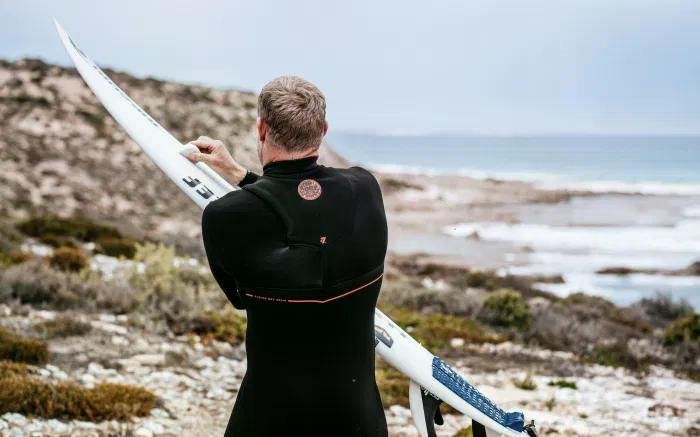
The natural stretch in a modern wetsuit comes from panel design, lining and flexible neoprene, not from the suit expanding over weeks of wear.
Once a wetsuit is pulled on and gets wet, it may feel slightly looser. That change is minor. It will not fix a suit that was the wrong size to begin with, and it will not give you the shoulder freedom or range of motion missing on day one.
Building on that, buying small and waiting for a break-in period rarely ends well. If the chest feels restrictive, the armpit digs in, or breathing feels strained, the suit is not fitting properly.
How to use a wetsuit sizing guide to get the right fit
Most reliable size charts prioritise weight over height, because a fitting suit has to seal and compress correctly through the torso and limbs before length becomes relevant.
If you sit between two sizes, that decision depends on how the suit feels in motion. A fitting wetsuit should feel snug on land, but not restrictive: you should breathe comfortably, move your shoulders freely, and lift your arms without sharp armpit pressure or an uncomfortable pull through the ribs.
As soon as you check the details, the fit becomes easier to judge: sleeves should finish at the wrist bone, leg cuffs just above the ankle. The neoprene should lie flat: no rolls, gaps or trapped air pockets. The zipper should close easily without excess fabric, yet not fight you so hard that the wetsuit is pulled out of position.
Once you get it in the water, the difference comes down to function. Mundo-Surf carries a broad range of sizes across brands, with 100-day returns so you can check whether the suit is fitting properly before you commit.
| Fit signal | Correct fit | Too small | Too large |
| Breathing (dry) | Full, comfortable breaths | Choking or strangled sensation | No restriction at all |
| Zipper closure | Closes smoothly | Difficult or impossible to close | Closes with excess fabric |
| Shoulder movement | Free, unrestricted | Sharp armpit pain when raising arms | Suit slides and bunches |
| Chest/rib panel | Snug, no visible pulling | Visible tension and pulling across ribs | Loose folds and air pockets |
| Entry difficulty | Hard but achievable with correct technique | Impossible to pull crotch high enough | Slides on easily |
| Fit in water | Second skin, comfortable and sealed | Restrictive, limits paddling | Cold water flushes through gaps |
Wetsuit care that keeps neoprene flexible and easy to don
A suit that feels easy on day one can turn stiff fast if it is cleaned or stored badly. The difference comes down to what happens between sessions: putting on a wetsuit ten surfs in is often far more about care than break-in.
Why a poorly stored wetsuit becomes harder to put on
That starts as soon as you leave the water. Salt, sand and organic residue work into the lining and seams, and once the material begins to degrade, the wetsuit loses stretch, feels uncomfortable, and becomes harder to pull on properly.
If that neglect continues, the neoprene can become brittle. In practice, that is when you risk a tear during a normal donning attempt, even when you try to put your wetsuit on correctly.
- No car boot storage (damp): A wetsuit left sealed in a bag while wet deteriorates quickly: heat, moisture and darkness speed up the breakdown of the neoprene foam structure.
- No direct sunlight: UV and heat dry neoprene unevenly, creating stiff areas that resist movement and make the suit uncomfortable over the joints.
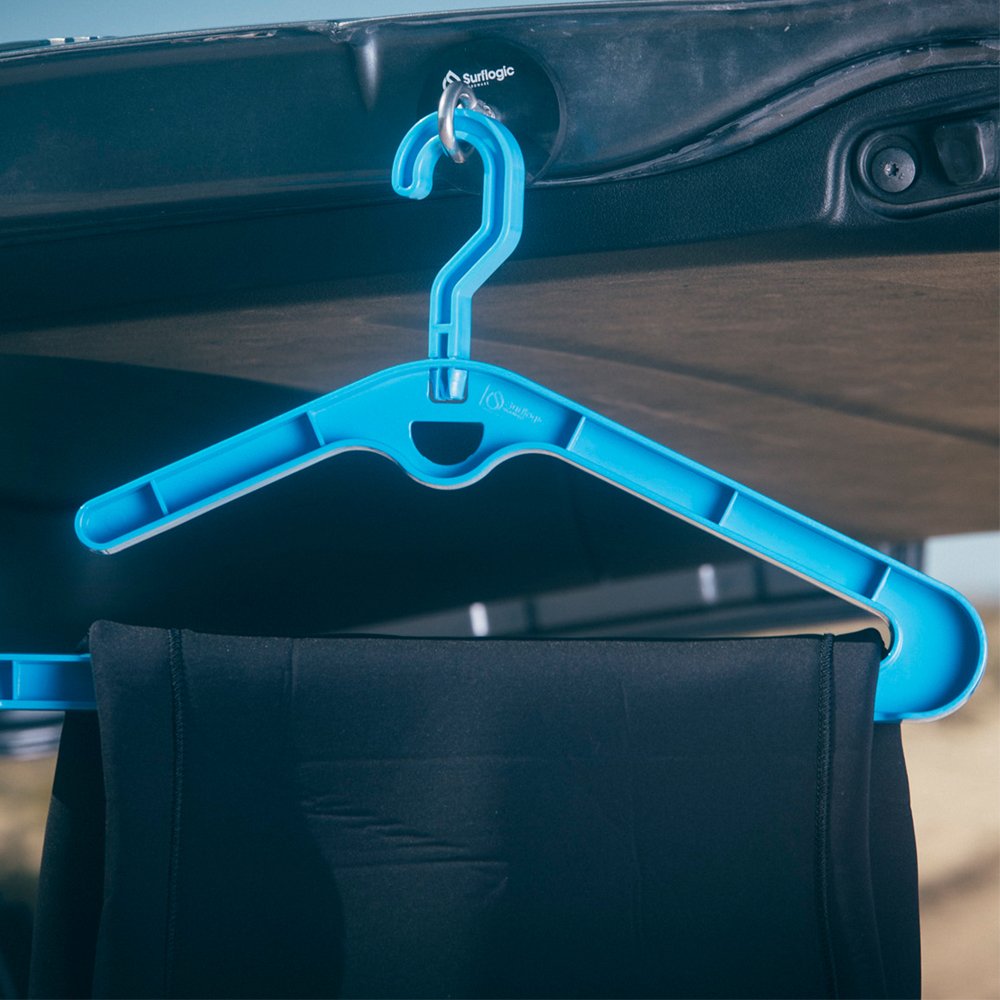
- No standard clothes hangers: A narrow hanger concentrates the weight of a wet 4/3mm suit on one point, which can permanently deform the shoulder panels over time.
Dry the suit flat or on a wide-shoulder specialist hanger, away from sun and heat, and the neoprene keeps its shape so you can put your wetsuit on more easily next time.
Cleaning and drying routine after each session
Building on that, regular rinsing is central to wetsuit care. Salt and chlorine break down the neoprene foam from the inside out, and the zip mechanism is the first place you notice resistance.
For day-to-day use, spray cleaners suit quick post-session maintenance. By contrast, soak-type cleaners are the right choice when heavier build-up sets in after a run of autumn or winter sessions.
Storage accessories that protect neoprene between sessions
Once the cleaning is handled, transport and storage matter just as much. A dry bag reduces exposure to salt water, sand and sunlight, all of which shorten the life of a wetsuit and make it less comfortable to pull on easily.
Worth knowing before you buy: Mundo-Surf carries a complete range of wetsuit drying accessories, including specialist hangers, dry bags and changing mats.
A portable changing mat keeps grit and asphalt off the outer surface while you pull the suit on: small abrasions accumulate and compromise the rubber seal around the seams. A suit stored and handled correctly keeps its stretch and stays easy to pull on from the first session to the fiftieth.
Frequently asked questions
Are wetsuits supposed to be hard to put on?
Yes. A wetsuit should feel snug if it fits properly, because it is designed to hold a thin layer of water against your skin for insulation.
That is why a suit that slips on too easily is often too big. In practice, a new wetsuit can take 15 to 20 minutes to get into correctly, especially before the neoprene has had time to soften and develop more stretch.
Do wetsuits get easier to put on over time?
They do. After a few sessions, the neoprene relaxes slightly, gains a more natural feel, and starts to shape itself to your body.
Building on that, care matters just as much as break-in. Rinse it after every session and dry it on a specialist hanger: that keeps the neoprene flexible and ready for the next session. A neglected suit can stiffen instead, and on the water, that matters.
What is the easiest type of wetsuit to put on?
A back zip wetsuit is usually the easiest because the opening is larger.
By contrast, a zipless wetsuit in soft, high-stretch neoprene can also work very well once your technique is dialled in. A chest zip or front zip wetsuit usually takes more practice at first, but the difference comes down to better flexibility and a more secure water seal once the suit is on correctly.
Share this article: