Shopping Cart
There are no more items in your cart


How to take care of wetsuits at home: wash, clean and store


Taking proper care of your wetsuit at home helps neoprene perform session after session. It limits premature wear, stubborn odours and costly replacements. This wetsuit care guide covers the full routine: rinse your wetsuit after leaving the water, clean it thoroughly, dry it correctly and store it safely for the long term. Mundo-Surf also offers a complete range of wetsuit accessories for regular wetsuit care.
Wetsuit washing guide at home
Learning how to wash your wetsuit at home starts with one rule: use cold fresh water promptly after every session. Salt, sand and bacteria are the main enemies of neoprene, and prolonged contact with them accelerates wear. Rinse the suit as soon as you can, then move on to thorough cleaning at home. Once that becomes second nature, Mundo-Surf's long‑term wetsuit storage guide will help you handle the final stage.
Rinse out salt and sand
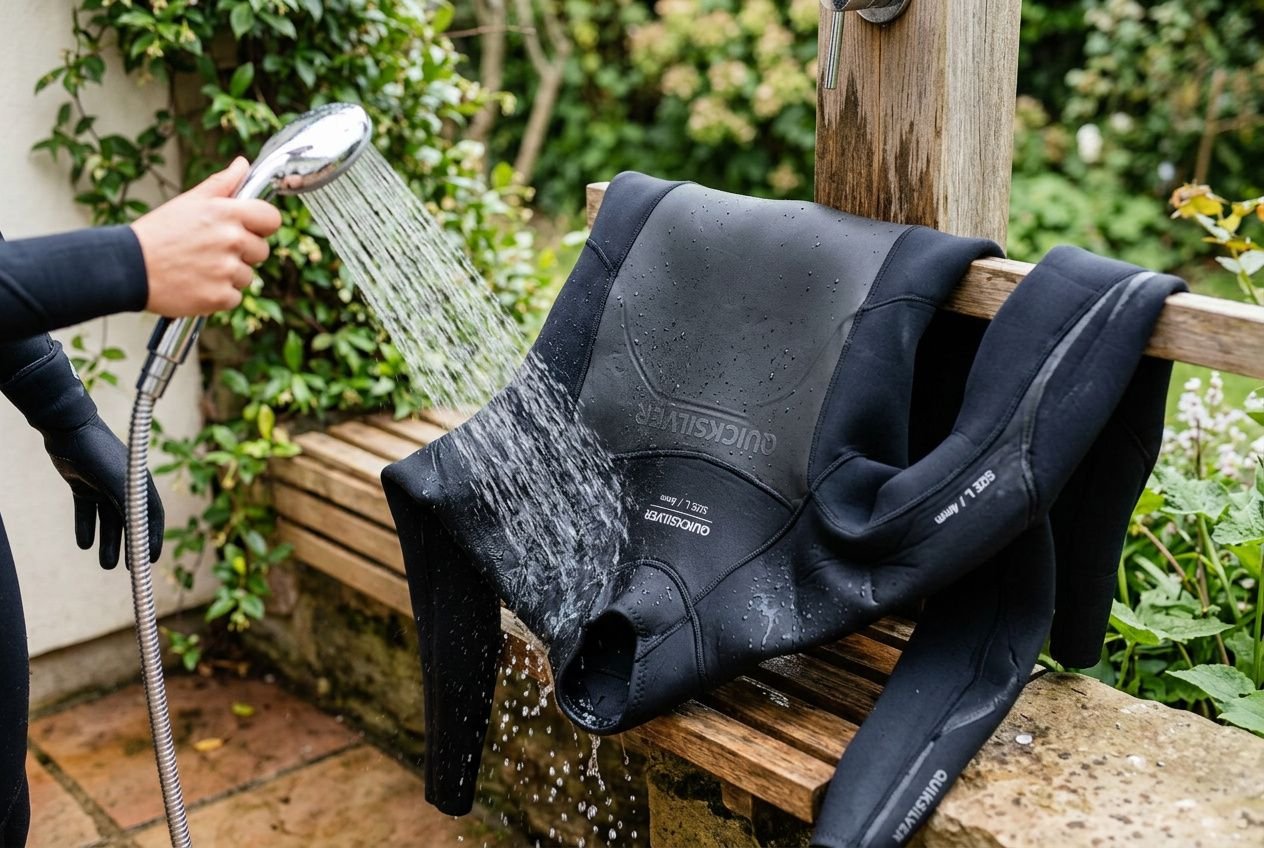
The simplest way to wash a wetsuit at home is to make rinsing part of your post-session routine. Salt and sand trapped in the neoprene fibres work like sandpaper as the suit moves, gradually wearing the material from within. Turn the wetsuit inside out as soon as you take it off so you can reach the lining, where sweat and sand usually collect.
- Water source Use a garden hose, shower, large bucket or clean tub. Cold or cool water is the priority; avoid hot water, which can damage neoprene flexibility.
- Both sides Rinse the outside first, then turn the wetsuit inside out and rinse the lining until the water runs clear, with no visible salt or sand residue.
- Accessories too Booties, gloves and hoods need the same cold fresh-water rinse after every session. Salt and sand can degrade their seams just as quickly.
- Timing Remove the wetsuit as soon as practical after surfing. Handling it before it dries makes it easier to remove retained sand and sweat.
On the water, that matters: a suit weakened by salt build-up can cost you warmth as well as money. Missing one rinse is not catastrophic, but repeated neglect soon adds up.
Why machines damage a wetsuit
Putting a wetsuit in a washing machine is among the harshest treatments for neoprene. Drum agitation strains glued seams, distorts panels and may separate bonded sections that no repair adhesive can fully restore. Standard laundry detergent makes matters worse because its chemicals strip away the material's natural suppleness.
The same caution applies to heat during washing and drying. Hot water weakens neoprene fibres, while a dryer can damage the suit through tumbling and excessive temperature. The difference comes down to how quickly flexibility is lost: heat may cause immediate harm, while repeated harsh washing gradually shortens the suit's life. For cleaning your wetsuit safely, use cold water, a dedicated wetsuit cleaner and patient hand-rinsing. Never use a dryer; allow natural drying away from direct heat.
Clean a wetsuit safely
A cold rinse removes daily salt and sand, but it will not reach the bacteria and algae that build up over several sessions. Every three to five surf outings, give your wetsuit a proper wash with a neoprene-safe product. The soak allows the cleaner to dissolve grime stuck in the neoprene cells where a rinse cannot reach. Look for formulas labelled neoprene-safe, since ordinary laundry liquids can break down the foam's structure over time.
Choose wetsuit shampoo or alternatives
A quality wetsuit shampoo is designed to dissolve algae, bacteria and salt deposits without stripping neoprene of its elasticity. Standard soaps and detergents cannot offer the same assurance. Fill a large tub or bucket with cool to mildly warm fresh water. Add the cleaner according to the label, submerge the suit, and soak for 10 to 15 minutes. Then remove the wetsuit and rinse it thoroughly with cool water until no residue remains. Use the same method for neoprene booties, washing them alongside the suit to keep odour from settling into the seams.
Some all-in-one formulas combine shampoo and odour control in one treatment, which can be useful if you wash regularly and want fewer products. Mundo-Surf offers neoprene-compatible options for different session frequencies and quantities of gear, so you can choose what suits your routine.
| Cleaning method | Frequency | Key benefit | Key risk if skipped |
| Cold fresh-water rinse | After every session | Removes sand, salt and surface dirt immediately | Accelerated neoprene wear |
| Wetsuit shampoo soak | Every 3–5 sessions | Eliminates bacteria, algae and deep salt deposits | Persistent odours and fabric degradation |
| Deep clean with odour treatment | Monthly or every other month | Resets freshness and targets bacterial build-up | Chronic bad smells and hygiene issues |
| Neoprene booty wash | Twice a month | Controls odour and preserves seam integrity | Rapid odour build-up inside sealed rubber |
Remove lingering odours
If washing does not remove a smell, bacterial build-up is usually the reason. A dedicated odour-eliminating wetsuit product targets that residue; apply it as the final treatment before drying, since the formula needs to dry on the suit to work properly. Some products also act as shampoo, so you can clean and deodorise in a single soak.
For a more accessible homemade wetsuit cleaner, use a tub of cool water with several cups of white vinegar and a few drops of essential oil as a disinfecting soak for a particularly funky suit. Vinegar helps break down bacterial residue, while the essential oil softens its sharp acidic scent. Rinse the wetsuit thoroughly afterwards with cool fresh water, as vinegar left in neoprene can become an irritant over time.
Bacteria multiply quickly inside a warm, damp wetsuit, so treat stubborn smells early instead of waiting for a full deep clean. Even a basic vinegar soak between proper washes can keep the problem manageable. Mundo-Surf stocks dedicated neoprene cleaning products for surfers who prefer a proven formula over DIY alternatives, including concentrates for weekly users and travel-friendly sachets.
Recommended products
Dry your wetsuit properly
Drying is when most wetsuit damage occurs. The problem is not the water itself, but how you handle the suit after rinsing. Direct sun, wire hangers, tumble dryers and wringing all put unnecessary stress on neoprene, shortening its working life. Cleaning matters, but drying matters just as much. The hanger you choose and the place you hang it make the difference.
Dry inside out in shade
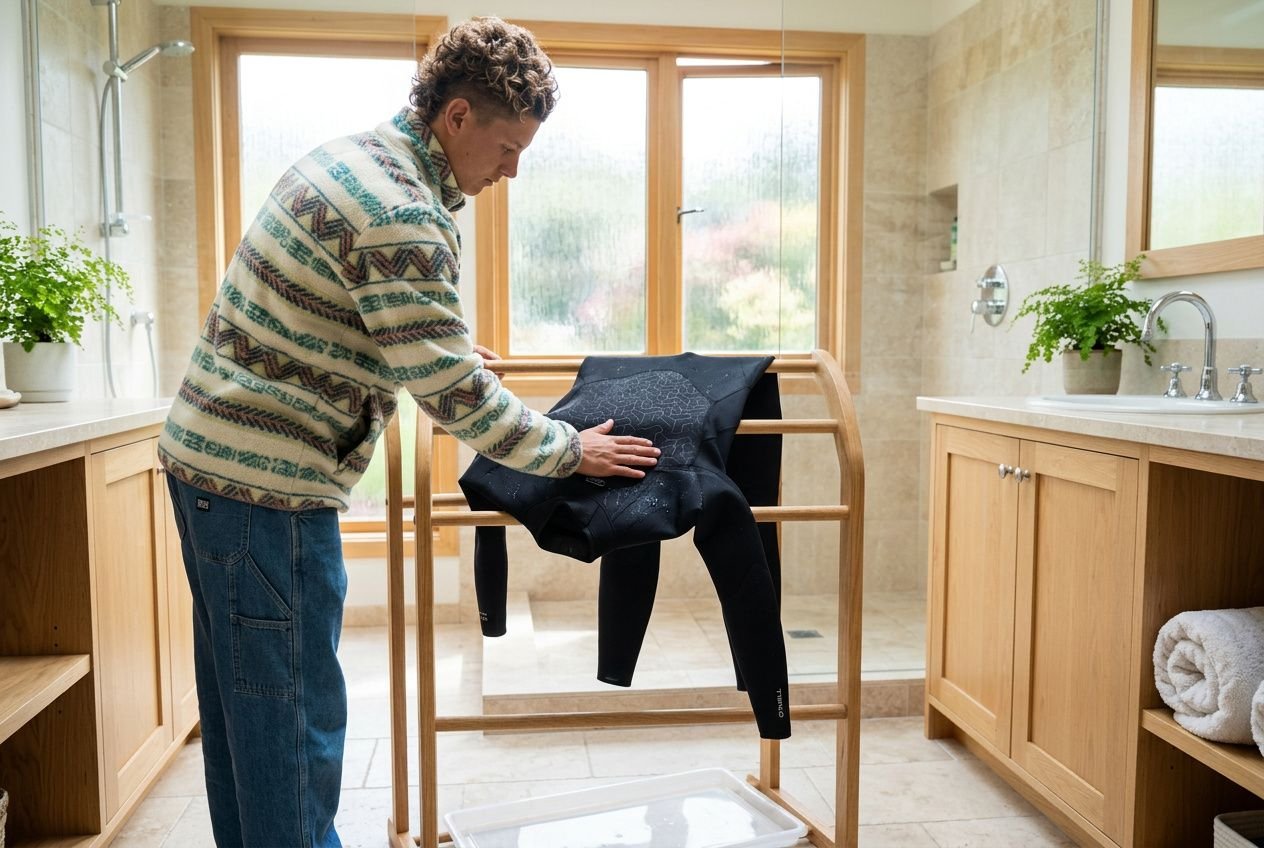
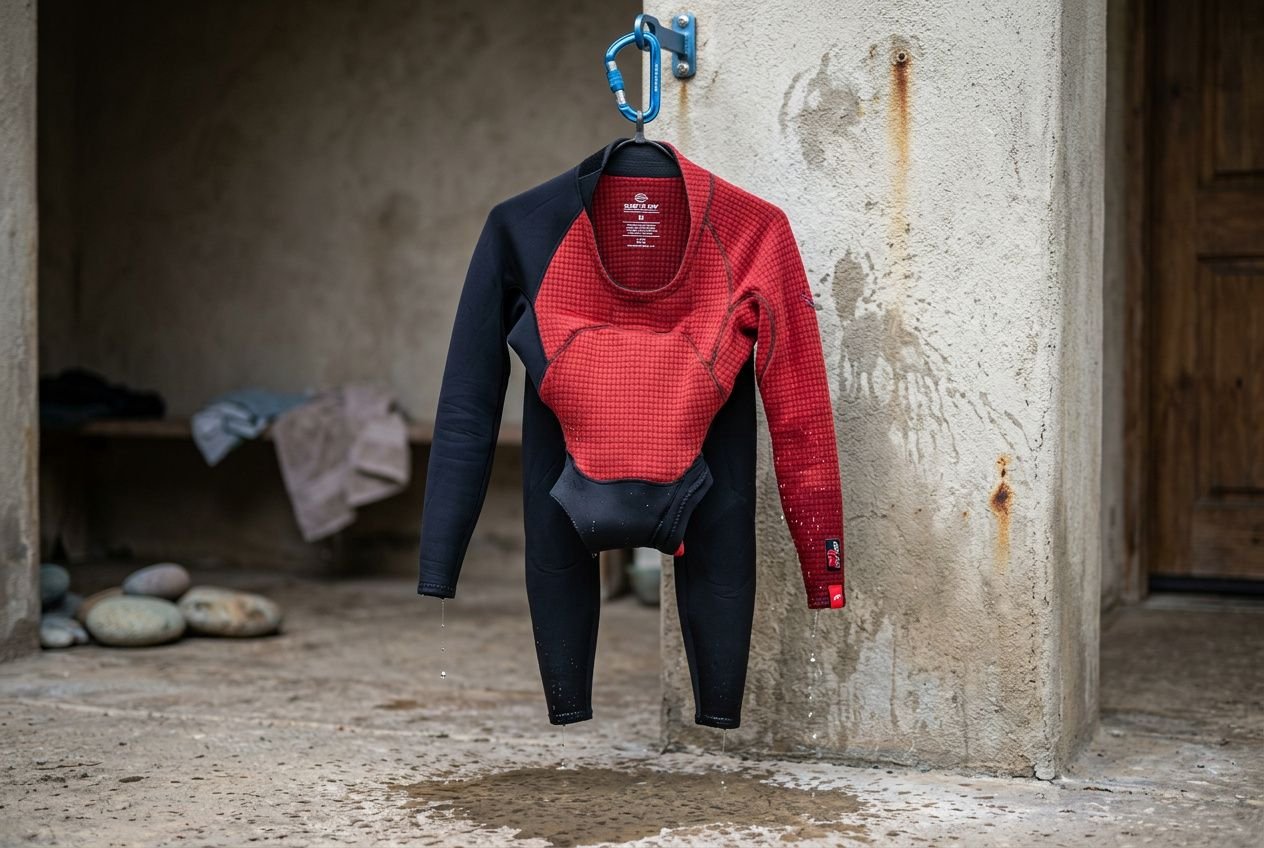
Start drying your wetsuit inside out, since the lining holds more moisture than the outer rubber. Keep the suit in shade: direct sunlight quickly ages the rubber and reduces its elasticity, even after a single bright afternoon. A well-ventilated bathroom, open garage or shaded porch moves enough air without heating the rubber.
- First hang position While the suit is wet and heavy, hang it by the waist over a bath or shower tray. Excess water can drip away without loading the neoprene shoulders.
- Shade requirement Keep the drying wetsuit out of direct sunlight throughout the process. UV and heat accelerate rubber ageing, even when the air temperature feels moderate.
- Inside-out sequence Once the lining feels dry to the touch, turn the suit right side out and continue hanging it by the waist until the outer rubber is fully dry.
- Never wring Wringing twists seams and neoprene panels. Press out excess water gently by hand instead, moving from the shoulders towards the ankles.
Once both sides are dry, store the suit loosely rather than rolled or bunched. On the water, that matters: a wetsuit that never dries fully between sessions deteriorates from the inside out, and the damage builds with every outing.
Use hangers without stretching
A thin wire hanger under the shoulders creates pressure points. It can leave permanent indents. The wet suit may also stretch the shoulder panels out of shape. Choose a wide plastic hanger with rounded shoulders, or a dedicated horizontal wetsuit hanger that folds the suit at the waist for drip drying. The difference comes down to support: not every hanger suits neoprene, and the wrong one can cause lasting damage.
By contrast, a wide-shouldered plastic or horizontal hanger spreads the suit’s weight evenly without pulling at the shoulders. Use the horizontal option while the suit is wet and heavy, then move to a broad hanger once it is dry enough to handle safely. Never put a wetsuit in a tumble dryer. Mechanical tumbling and heat damage the neoprene and seams, so let the suit finish drying naturally.
Wetsuit care and storage tips
How you store a wetsuit between sessions and across seasons has a direct effect on how long it keeps its shape, stretch and warmth. A suit that you wash, rinse and clean properly can still suffer damage from mould, compression or excess heat if storage is careless.
Store a wetsuit fully dry
Never hang or store a wetsuit when it is still damp. Even slight moisture trapped in a cupboard or bag encourages mould, mildew and stubborn odour, and later cleaning or washing will not fully fix it. Fully dry means both sides are dry, including the lining and the outer neoprene.
Once the wetsuit is dry, keep it in a cool, dry place away from direct sunlight and extreme temperatures. Never leave the suit in a car boot for long periods: in practice, parked cars build heat far beyond what neoprene can handle without losing elasticity. The same applies near boilers or heating systems, because ambient heat can do as much harm as direct sun.
- Long-term hanging: For storage over weeks or months, hang the completely dry suit on a wide-shouldered or horizontal hanger. Proper hanging helps the suit hold its shape and helps you avoid creases in the neoprene.
- Flat folding: If you cannot use a hanger, fold the dry suit gently and lay it flat. That is the right choice when space is limited, as long as you avoid sharp creases in the panels.
- No tight rolling: Never store a wetsuit rolled up tightly, whether it is wet or dry. Rolling compresses the material and stops airflow if any moisture remains.
Building on that, check the suit before you put it away. Look for small tears, loose seams or Velcro lifting from its protective fabric patch, because ignored damage grows with every surf session. Always cover the Velcro to stop it snagging the inner lining during storage.
Protect neoprene between surfing sessions
Once storage is sorted, the same logic applies between surfing sessions. Sand under your feet, gravel in the car park or mud by a river break can all mark or wear the wetsuit faster than you expect. Stand on a clean towel, mat or plastic tub when changing, handle the suit gently, and avoid dragging it across rough ground.
Worth knowing before you buy: proper wetsuit care also means reducing the need for heavy cleaning. If possible, avoid urinating in the suit, remove it as soon as practical after the session, turn it inside out, and rinse it before you leave it to dry. A wet wetsuit should not sit in a bag or car boot; a fresh-water wash after each surf keeps your routine simple.
Mundo-Surf gives you 100 days under its returns policy to assess a new wetsuit, but a little care from day one makes the real difference.
Frequently Asked Questions
After every surf, give the wetsuit a cold fresh-water rinse. That clears off sand, salt and the surface bacteria that wear a neoprene suit fastest, and in practice it is the simplest way to clean your wetsuit before grime settles in.
Building on that, a proper wash with a neoprene-specific product makes sense after three to five sessions. Or as soon as odour starts to build. A monthly deep clean also helps: soak the wetsuit for 10 to 15 minutes in a wetsuit cleaner solution. Then rinse it thoroughly to keep the dry feel, flexibility and lifespan on track.
Yes. The difference comes down to moisture: the inner lining holds more water than the outside and takes longer to dry, so turning the wetsuit inside out first deals with the slowest part of the job.
Sunlight can age the neoprene even on a mild day, and on the water, that matters.
As soon as the lining feels dry to the touch, turn the suit the right way out and continue hanging it by the waist. That hanging position helps the whole wetsuit dry evenly before storage or the next surf session.
If you do not have a dedicated wetsuit shampoo to hand, a simple mix can work as a fallback for a smelly suit: cool water, several cups of white vinegar and a few drops of essential oil. Worth knowing before you buy, that blend helps break down bacterial residue while softening the vinegar smell.
Afterwards, wash and rinse the wetsuit thoroughly with cool fresh water. By contrast, a purpose-made wetsuit cleaner remains the steadier long-term option than a homemade mix, and Mundo-Surf stocks several products, including wetsuit cleaner and wetsuit shampoo options, suited to different session frequencies.
Share this article: