Shopping Cart
There are no more items in your cart


Best type of surfboard to learn on: a beginner foam surf guide


Choosing the right type of surfboard for learning on affects how quickly you progress, how many waves you catch and how safe your first sessions feel. This guide covers the essentials: board shape, volume, foam construction and length by rider weight, so you can enter the water with equipment suited to your current level.
The best type of surfboard for a beginner
The two non-negotiable qualities in a first surfboard are buoyancy and stability. Without enough float, paddling tires you before a wave arrives. Without enough width, standing up becomes a repeated exercise in falling sideways.
What makes a surfboard easy to learn on
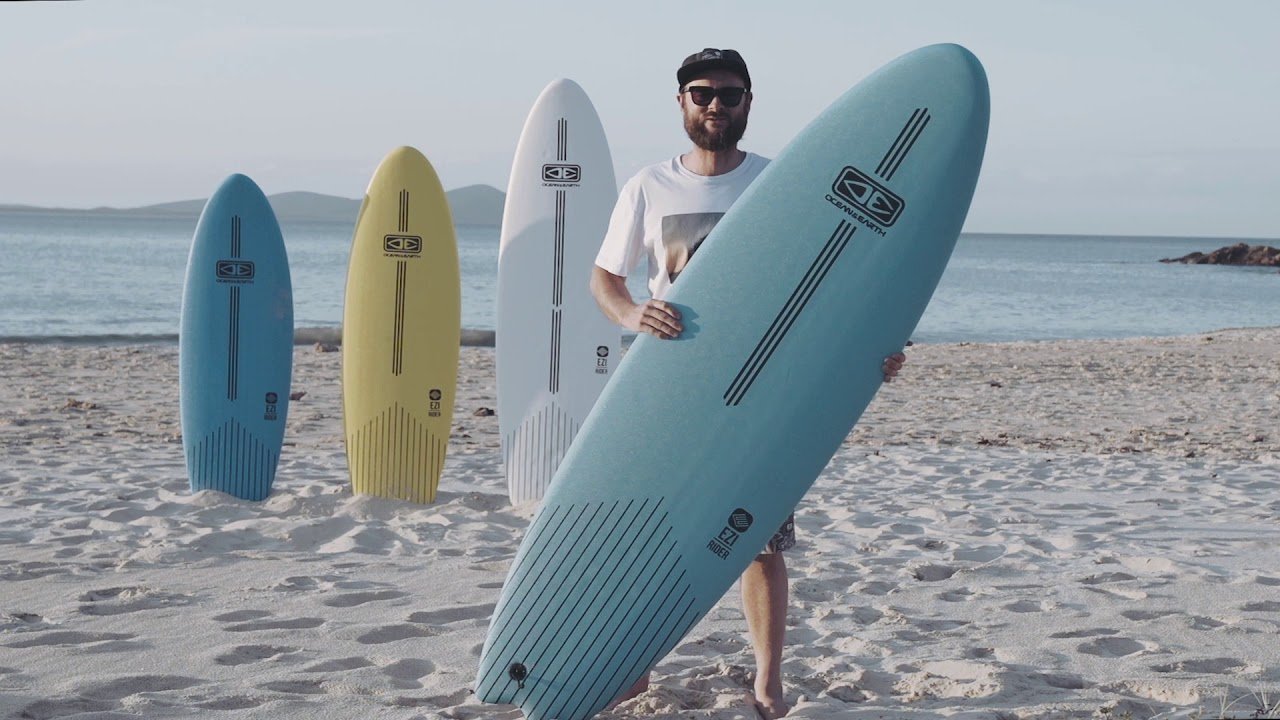
The right type of surfboard for learning on prioritises volume, width and a forgiving outline. More volume gives you more float, allowing each paddle stroke to move you forward quickly enough to match an approaching wave. That timing is where learning begins: without it, you cannot get the repetitions needed to improve your pop-up and balance.
- Volume determines how well the surfboard floats you. Too few litres mean sluggish paddling and missed waves from the outset.
- Width creates the lateral platform that keeps you stable during the pop-up. For most adults, at least 22 inches is a sensible starting point.
- Length adds paddle momentum and glide, helping you match wave speed before standing up. Longer boards generate that momentum more easily.
- Shape also matters: a full, rounded outline with broad rails is forgiving while your weight distribution is still inconsistent during early learning.
Confidence in your equipment affects how quickly your technique develops during those first sessions.
Why bigger boards catch more waves
Identifying the best type of surfboard for learning on comes down to a simple relationship: surface area and volume create paddle speed, while paddle speed determines whether you connect with a wave or watch it pass. A board of 7 feet or longer generates enough momentum after a few strokes for even a beginner to match a small, broken wave without perfectly timed technique.
The basic rule is reliable: a bigger surfboard produces a higher wave count per session. More waves mean more practice time on your feet, and practice is the dependable route to improvement. Your first board should be at least 7 feet long, at least 22 inches wide and have enough volume to float you comfortably. Prioritise wave count and safety over manoeuvrability at this stage.
Why a foam surfboard suits beginner lessons
A foam surfboard removes two major obstacles when you start surfing: fear of the board and concern about damaging it. Because the surfboard is soft to the touch, falls and collisions feel far less serious. That lower anxiety builds confidence, helping you commit to the pop-up instead of hesitating at the critical moment.
Foamie safety and stability
Choosing the right type of surfboard to learn on, for beginners, means recognising what a fully soft foamie offers. Its surface absorbs impact during wipeouts, reducing the chance of cuts or bruises caused by the board. That safety margin matters in the early weeks, when falls are frequent and unpredictable.
- Soft surface reduces injury risk from board contact during falls, creating a safer learning environment for you and other surfers nearby.
- High buoyancy from thick, wide foam construction makes paddling easier, helps you catch a wave sooner and provides a stable platform for the pop-up.
- Durability is another advantage of a traditional foam board: it resists minor impacts and dings, so you can focus on technique rather than equipment damage.
- No wax required on school-style softboards with a deckpad grip surface, removing one preparation step and leaving the board ready to use.
By contrast, a hard surfboard asks more of you. It paddles more slowly at equivalent volume, exposes small balance errors and can cause real injury on impact. The foamie gives up some high-performance responsiveness, but that trade-off is worthwhile during the earliest stages: the aim is to ride more waves, not sharpen rail turns.
School foam boards for first sessions
Finding the best foam board for beginners often means looking at school-edition softboards. They are designed for repeated use across many sessions and riders, with the emphasis on longevity and ease rather than performance surfing. Their dimensions show that priority clearly.
- 7'6 school softboard: approximately 77 litres of volume, 22½ inches wide and 3½ inches thick; a reliable starting point for lighter adults and older teenagers.
- 8'0 tanker softboard: 109.4 litres, 27 inches wide and 4 inches thick; it provides easy flotation and straightforward take-offs for most adult beginners.
- 9'0 tanker softboard: 137.5 litres, 28 inches wide and 4¼ inches thick; it offers maximum stability and paddle assistance for heavier riders or complete first-timers.
Once you move from school formats to a board of your own, the same logic applies: prioritise volume and a soft deck surface during your first months of learning. Mundo-Surf stocks foam boards suited to first sessions, with availability from its own warehouse, 100-day returns and free shipping on orders over €99. That is worth knowing before you buy.
Beginner surfboard size and volume guide
Volume is not a figure to match blindly against a chart. Read it alongside length, width and thickness, because two surfboards with the same length can float very differently when their volume is distributed differently.
Match volume to rider weight
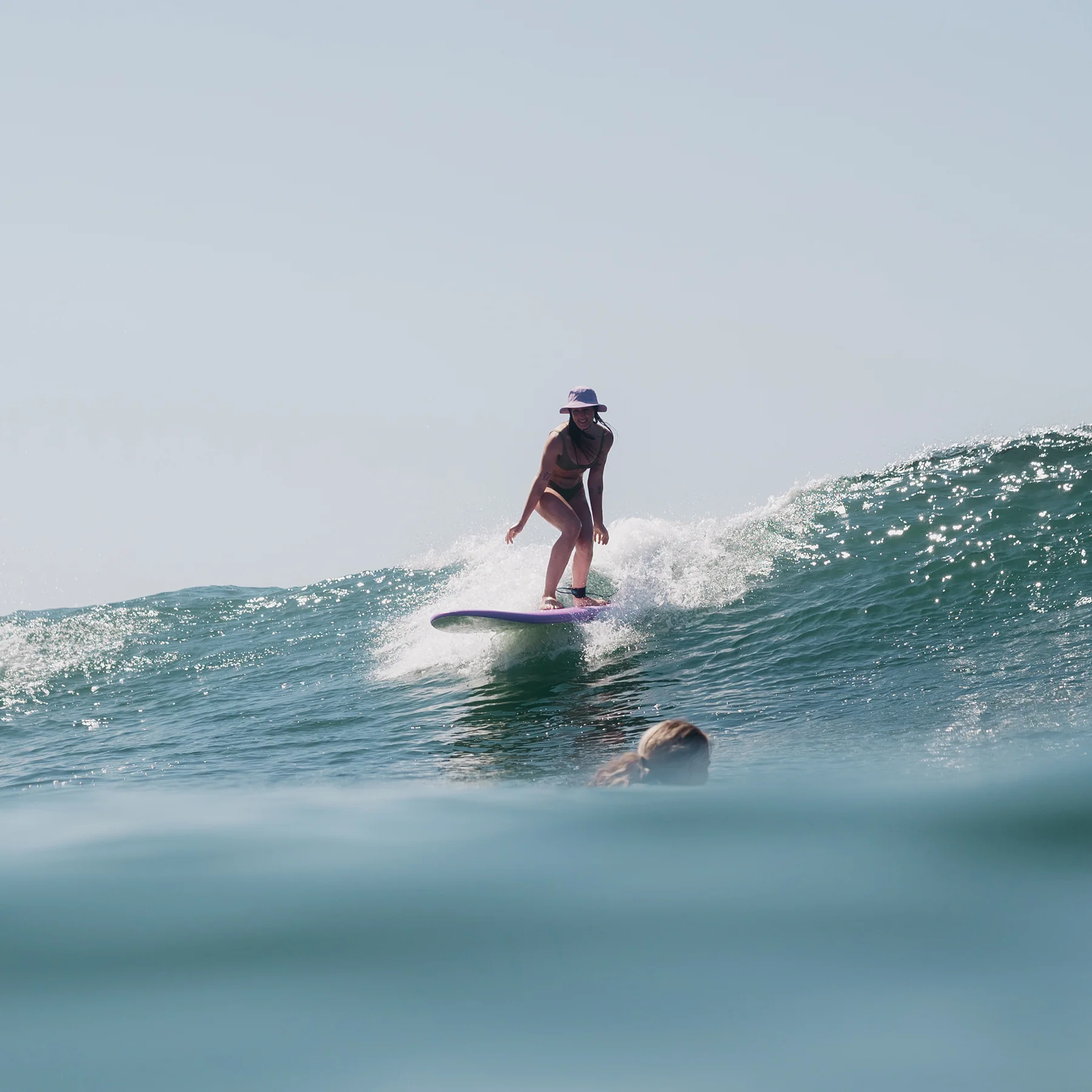
For beginner surfboards for adults, a simple formula is: add 10 to 15 litres to your body weight in kilograms. A 70 kg rider, for example, should consider 80 to 85 litres as a sensible lower boundary. That extra flotation helps a beginner more than an intermediate surfer of the same weight, whose paddling technique is already more efficient.
That formula is only the starting point. A wider board with the same volume will feel more stable than a narrow one, while width and thickness distribution affect handling as much as the total litre figure. A board measuring 22 to 24 inches wide generally suits adult beginners seeking stability; going slightly above the calculated volume also makes early sessions more forgiving in inconsistent conditions.
| Rider weight | Board length | Volume guide | Notes |
| Up to 50 kg (children) | 6'0" – 7'0" | 35 – 50 litres | More length adds stability; harder to turn |
| Up to 75 kg (adults) | 7'0" – 7'6" | 50 – 60 litres | Lower range; first-timers may benefit from more |
| 75 – 85 kg (adults) | 7'6" – 8'0" | 60 – 75 litres | Broader platform increases pop-up stability |
| 85 kg+ (adults) | 8'0" or longer | 75+ litres | Extra volume particularly useful for complete beginners |
If you sit between two options in this guide, choose the larger surfboard. Too little volume makes wave catching harder and quickly drains your energy, whereas a slightly oversized board is easier to manage in small surf. Very thick boards can feel awkward when paddling around sections, but flotation and stability matter more on a first board.
Size ranges for children and adults
The right type of surfboard to learn on for a beginner depends on the rider. Body weight, arm strength and centre of gravity all influence the required length and volume, so the board that suits an adult will not necessarily suit a child. Adults usually need more litres relative to their weight during their first sessions because they have more mass to support and less balance practice on unstable surfaces.
Length improves glide and paddle ease, while width supports pop-up stability. A first board benefits from generous dimensions in both.
- Children (up to 50 kg, ages 10–12): a 6'0" to 7'0" soft surfboard works well; extra length adds stability but increases the effort needed to turn in whitewater.
- Adults up to 75 kg: a 7'0" to 7'6" surfboard with 50 to 60 litres is a useful lower guideline, although complete beginners in this bracket often benefit from more float.
- Adults 75–85 kg: a 7'6" to 8'0" surfboard with 60 to 75 litres provides a stable platform for early sessions in small surf.
- Adults over 85 kg: an 8'0" or longer surfboard with at least 75 litres is the right starting point because the volume needs to support the rider's load.
These ranges assume complete beginners with no prior surfing experience. If you already have experience with paddleboarding, bodyboarding or kitesurfing, you may handle the lower end of a bracket sooner. Start conservatively with volume, then move to a smaller surfboard once your paddle technique and pop-up are consistent.
Choosing a soft surfboard for progression
Once a traditional foamie has served you through the first sessions, you face a choice: stay on a fully soft board or move to something with more response underfoot.
Is a 7-foot surfboard good for beginners?
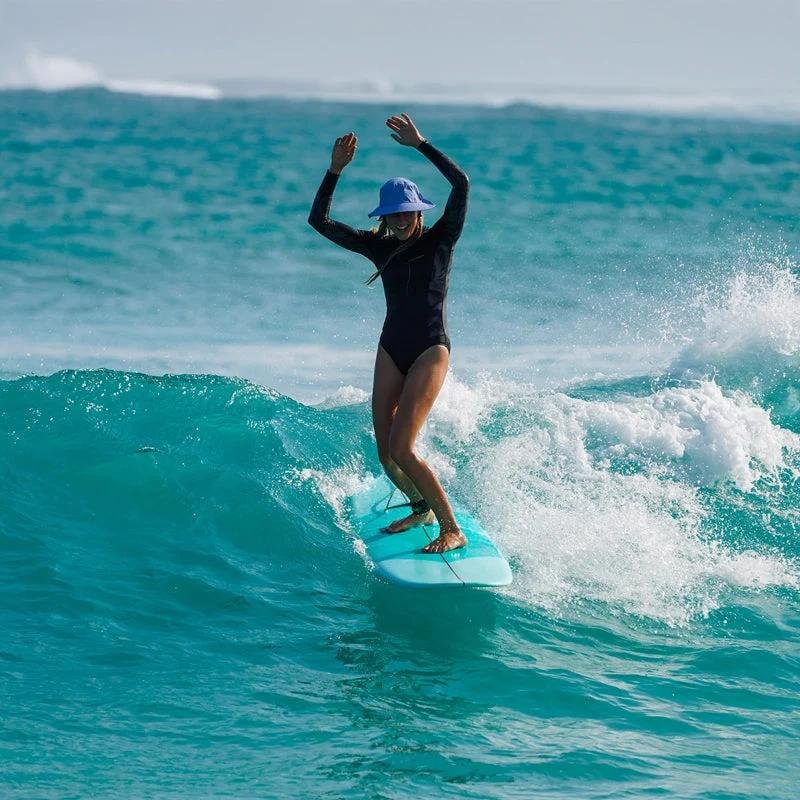
Discussions on Reddit about the type of surfboard to learn on often return to the same point: a 7-foot board looks manageable, but is it enough for a first session? For heavier riders or complete beginners with no board-sport experience, 7 feet is often close to the minimum for reliable stability and float.
By contrast, a 7-foot soft top with a rigid epoxy core beneath its foam deck behaves differently from a traditional softboard of the same size. The stiffer structure improves paddling efficiency and rail response, partly offsetting the shorter length. That difference makes a well-specified 7-foot soft top a practical learning board for lighter adults, although a larger surfboard remains the safer default for most complete beginners.
When a soft top becomes the right choice
A soft top is the right choice when you have moved beyond your first sessions on a school foamie and want a board that develops with your technique. The difference comes down to receiving better information from the board without giving up that forgiving surface.
Soft tops suit consolidated beginners and lower-intermediate riders surfing small to medium waves, generally from around 0.5 to 1.5 metres. In practice, those conditions cover many learning environments: beach breaks in light wind, gentler reef sections and most surf-school setups.
Building on that, a well-chosen soft top can support your early progression, consolidate your paddling and stay useful as conditions become more demanding. It bridges the gap between a school foamie and a full hard surfboard, extending productive learning before you need another upgrade.
The Zeus Fuego 7'explained
The Zeus Fuego 7'is a soft top surfboard designed to make learning to surf easier, and its construction reflects that purpose throughout. For adults weighing under 70 kg, the ideal soft top surfboard for learning provides 56 litres of volume in a format that balances safety with genuine progression potential.
- Core and structure: EPS core with 2 stringers, 2 layers of fibreglass on the deck and 1 on the bottom, laminated with epoxy resin for long-term durability and stiffness.
- Deck surface: EVA foam provides grip and comfort without wax, so the board is ready to use straight from the box, session after session.
- Bottom construction: a PE slick plastic bottom improves response and speed underfoot compared with a traditional fully soft board of equivalent dimensions.
The epoxy lamination and fibreglass layers make the Zeus Fuego 7'robust enough for sustained, regular use. It is not a board that deteriorates quickly with frequent sessions. For more detail on construction, volume selection for your weight and level, and the type of surfboard to learn on in different wave conditions, consult the soft top surfboard guide for learning for guidance on the type of surfboard to learn on in different wave conditions.
Longboard or shorter surfboard for first waves
Your first surfboard influences the fundamentals you build. Paddling technique, pop-up timing and weight distribution all develop differently according to board length. A longboard teaches you to read glide and generate momentum, while a shorter board demands quicker decisions. For most beginners, starting with a longer, stable shape is the lower-risk route, with a shorter format added once the basics feel consistent.
Why a longboard helps beginners surf
A longboard is a full-outline surfboard over 8 feet, usually with a rounded nose and wide rails. It maximises the three qualities a beginner needs most: easy paddling, frequent wave-catching and pop-up stability. Its extra length creates glide after only a handful of strokes, so you reach wave speed with less effort. A useful starting rule is a board around 3 feet longer than your height, provided the volume also suits your weight. Longboards work particularly well in small, friendly surf, where their efficiency helps you catch both unbroken and broken waves throughout a session. That repetition drives learning and progression.
Mini Mals after the first foam board
Once your paddling is consistent and your pop-up lands reliably, a Mini Mal gives you a more manageable format without losing what the longboard taught you. These round-nose boards, typically 7'6" to 8'6" for adults, retain easy paddling and simple early turns while offering a more responsive feel underfoot. The Zeus Temper 8 beginner board sits in that bracket, making it a logical step in shape and length from a larger school foamie. Mundo-Surf offers this type of board for riders ready to learn beyond their first soft board.
- Length range: 7'6" to 8'6" covers most adult progressors, balancing longboard-style glide with easier handling in steeper or more powerful small waves.
- Round nose: preserves the nose rocker and outline volume that make paddling and wave-catching straightforward during the early intermediate phase.
- Manoeuvrability: the shorter length makes redirecting the surfboard in whitewater and on the face more accessible than on a 9-foot longboard.
Around 90 % of surfers moving from a foamie to a hard board gravitate towards a round-nose Mini Mal between 7'2" and 8'6". The figure reflects how effectively this shape bridges early-stage learning and genuine progression. A funboard in this range also fits the category: a funboard from 6 to 8 feet, with a wide and forgiving outline, suits advanced beginners ready to start linking turns. It works better as a second or third board than as a first.
Why short boards slow learning
A short, narrow, low-volume surfboard is one of the least suitable tools for anyone new to surfing. When a board is harder to paddle and less stable underfoot, you catch fewer waves, and that slows every skill surfing requires. A performance-oriented 5'0" or 6'0" surfboard demands technique that usually takes years to develop; without it, the board works against you during the critical early months of learning.
- Low volume: insufficient float produces sluggish paddling, so wave after wave passes before the board reaches the speed needed to connect.
- Narrow width: a narrow platform makes balancing during the pop-up extremely difficult, turning each attempt to stand into a stability problem rather than a technique exercise.
- Reduced length: a shorter surfboard generates less paddle momentum per stroke, compounding the volume problem and making wave-catching harder in small surf.
- Damage risk: a hard surfboard in a short format is easily dinged, needs regular waxing and can cause more injury on impact. That adds cost and concern when your focus should remain on surfing itself.
The difference comes down to wave count per session. A beginner on a large foam longboard may ride ten times more waves per hour than the same rider on an undersized shortboard. Those extra rides build technique quickly. The perfect beginner surfboard is not the one that looks impressive on the beach; it is the one that gets you to your feet on moving water, repeatedly, from the first session. Choosing a great beginner surfboard that genuinely suits your weight and experience gives you a stronger base for every board that follows.
Frequently asked questions
Is a 7-foot surfboard good for beginners?
A 7-foot surfboard can suit a lighter adult, generally under 70 kg, or a teenager with some water-sports experience. That is at the shorter end for most beginners. With a soft top, rigid epoxy core and 56 litres, the Zeus Fuego 7'offers more stability than its length suggests. Heavier riders and absolute first-timers will usually find an 8-foot or longer surfboard easier to start with because the extra volume supports more forgiving early sessions and a higher wave count.
What is the best foam board for beginners?
The best foam board for beginners matches your weight with enough volume. School-edition softboards in 7'6", 8'0" and 9'0" formats, with volumes between 77 and 137.5 litres, cover most adult learners well. For progression beyond the first sessions, the Zeus Fuego 7'bridges foamie and hard surfboard: soft deck over a stiffer, more responsive structure.
Is a 9-foot surfboard good for beginners?
A 9-foot surfboard is a sound choice for many adult beginners, especially heavier riders and those learning in very gentle surf. At that length, a foam longboard typically carries 100 litres or more, giving you easy paddling, stable pop-ups and reliable wave-catching in small, broken conditions. The compromise is handling: redirecting a 9-foot board in the water takes more effort than turning a 7'6" or 8'0" option.
Share this article: