Shopping Cart
There are no more items in your cart


Best surfboard for beginner women: top picks for 2026


Choosing the right surfboard for beginner women hinges on one idea: volume first, style later. Match length, width, and construction to your body and local breaks. This simple alignment shortens the learning curve dramatically.
Why the right surfboard matters for beginner women
You need early wins. The right board lets you catch waves sooner and pop to your feet faster with less fear. Miss the mark and progress stalls: frustration takes over. Get it right and each session builds on the last.
Foam surfboard vs hard board for first-time surfers
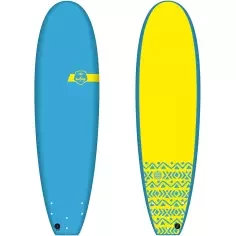
A softboard is the right choice when you’re still dialling in paddling and balance. The EPS core and PE or EVA deck pack extra volume, so paddling speed climbs and buoyancy forgives shaky footwork. Flexible fins and rubber bumpers tame wipe-outs; complete beginners stay safer and more confident.
- Impact absorption: Soft decks cushion contact and cut bruise risk.
- Rubber bumpers: Nose and tail guards spare shins and nearby boards.
- Flexible fins: They bend, not slice, if you and the board tangle.
By contrast, a hard surfboard punishes errors. Lower volume makes paddling harder: rigid rails hit like concrete. Shift only once your pop-up is automatic and you can read the peak without second-guessing.
Most common surfboard mistakes beginner women make
Too many riders chase looks over function. Short, narrow surfboard shapes feel nimble under experts but demand refined timing and flawless balance. For adults starting out, volume wins: the difference comes down to catching more waves in less time.
How Mundo-Surf guides you from day one
Building on that, Mundo-Surf's team tests every softboard and hard board in the range. The selection spans entry-level foam surfboard models through hybrid soft-top epoxy sticks: you grow without changing shop.
Mundo-Surf ships fast across the UK from live stock. This direct access includes 100-day returns—worth knowing before you buy—with expert advice always just one click away.
Surfboard volume and sizing guide for beginner women
Volume came up first for a reason: without enough litres under you, stability, paddling and early standing all suffer. By contrast, once you get that number right, every other dimension falls into place more cleanly. Mundo-Surf lists volume on every beginner model, so you see the key metric at a glance.
How to calculate the right surfboard volume for your weight
Use the simple weight-times-0.9 rule as your baseline. A 65 kg rider, for instance, aims for 55 – 60 litres; add a few litres if local wave conditions are gutless or fitness is still building.
Foam placement and rocker matter more than raw length, so a digital volume calculator beats guessing by outline alone. Pay extra attention to thickness under the chest: paddle power lives there.
| Rider weight | Recommended surfboard length | Volume range |
| Up to 75 kg | 7'0" – 7'6" | 50 – 60 litres |
| 75 – 85 kg | 7'6" – 8'0" | 60 – 75 litres |
| Above 85 kg | 8'0" or larger | 75+ litres |
Length, width and thickness explained for new surfers
Once volume is set, length fine-tunes glide. A 7 ft surfboard for beginners works for lighter women, while a width of 22 – 24 inches keeps balance forgiving during shaky first pop-ups.
Worth knowing before you buy: board length should sit 1 – 3 feet above your height, so a 5'8" rider fits neatly on 7'8" – 8'8". Wider tails and a gentle rocker increase stability in crumbly UK beach breaks.
Extra support from Mundo-Surf
Every beginner surfboard size chart on Mundo-Surf includes live stock data, 30-day returns and fast EU shipping, so adjusting specs as confidence grows stays straightforward.
Check the full thickness guide here: beginner surfboard volume.
Softboard features every beginner woman should look for
A surfboard only helps you progress if the build holds up. Cheap foamies bend, slow down, and fail fast, so your technique stalls right there.
Spend once on solid construction and the board pays you back in confidence every session after. In practice, that means cleaner paddling and a shape that still feels predictable once you start standing regularly.
Construction materials and safety benefits of a softboard
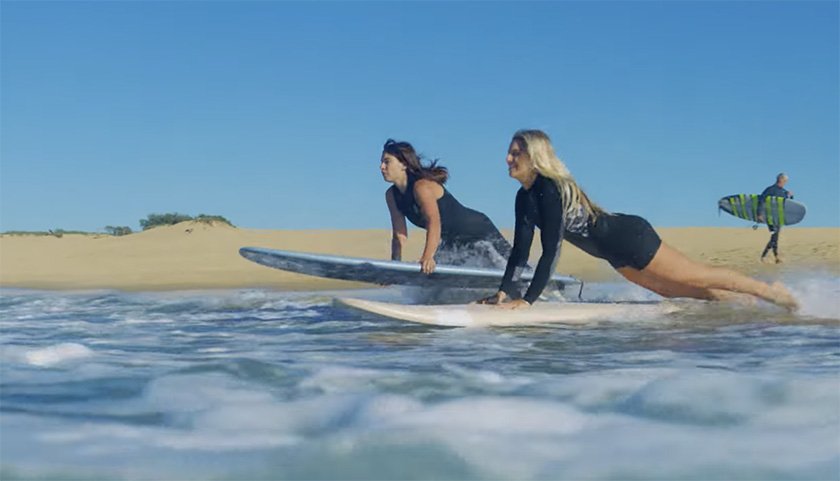
A good softboard for women pairs an EPS foam core with a thin epoxy skin. Water stays out, buoyancy stays in, and paddling feels lighter.
Building on that, the deck and rails matter just as much when you are learning. A soft outer layer reduces knocks during wipeouts, while the stiffer inner build keeps the board from feeling soggy underfoot.
By contrast, bargain boards under £100 often replace that sandwich construction with low-density foam. Flex creeps in, speed drops, and pop-ups start to sag.
Once a board twists underfoot, beginner surfing turns into a fight you cannot win. That is the difference between a board that helps you progress and one that limits you after a few sessions.
Fin setup and deck design for stability and confidence
That same logic applies to the fin setup. A soft top beginner package works well with a 2 + 1 layout: one centre fin for drive, two side fins for added stability.
Thrusters are usually more reactive than you need at this stage, and quads even more so. The right choice when you want easy tracking is a setup that settles the board rather than quickens it.
Once stability is sorted underneath, width becomes the next key factor. A broad nose catches waves early, while a 22-24 inch deck gives you more balance when standing.
Less roll gives you more time to shift weight and steer. On a first board, that extra platform is worth knowing before you buy.
- EPS foam core: high buoyancy you feel with every stroke.
- PE or EVA soft deck: cushions falls and reduces the hesitation that can slow learning.
- Rubber nose and tail bumpers: protect both riders and gear in crowded line-ups.
- Flexible fins: bend on impact rather than cutting skin.
Mundo-Surf stocks the full softboard range right now, from first-day foam logs to epoxy-reinforced hybrids. Returns and fast shipping are covered, so the right level of build is a straightforward decision.
How surfboard design affects wave catching for beginners
You already know a board has to pick up speed before anything else happens on the wave; design turns that theory into practice. A beginner surfboard's wave performance hinges on four levers: rocker, rails, tail, and foam placement. Get them working together and the board glides early, giving you a calm moment to pop up.

Rocker, rails and tail shape on a beginner surfboard
A low, continuous rocker is the right choice when UK beach breaks serve up soft, crumbling sections. More rail length touches the water, so the surfboard accelerates even in weak parts of the wave. With a flat rocker the board connects sooner: you're already standing while riders on curvier shapes are still paddling.
Once rocker is working in your favour, the same logic applies to the rails. A forgiving 60/40 profile carries volume high, boosting stability and letting you shift weight without the rail biting. Skip narrow blades designed for advanced turns; they punish every wobble and stall progress.
That forgiving feel carries through to the tail. A rounded template spreads lift and keeps the surfboard tracking straight when your rear foot lands an inch off-centre.
The wave conditions that let the board shine
That early glide shows up best in soft, waist-high peelers with a high-volume outline and gentle rocker. Those waves lack push, so the board's own speed engine—volume plus length—has to do the work. By contrast, punchy reefs allow leaner designs, yet beginners have little business there until the basics feel automatic.
Why raw speed outranks fin debates early on
Once the board planes, everything else gets easier: balance, direction, confidence. A rigid EPS foam core sealed with epoxy holds that speed by resisting flex. Cheap, sponge-soft laminates feel lively under the arm but lose drive after two strokes.
As soon as that speed is there, fin details matter far less than people think. Keep the fins intact and firmly screwed, then forget about them for now. A foamie surfboard with a simple 2 + 1 set can eclipse a high-end epoxy surfboard if the latter never reaches trim.
When and how to progress beyond your first surfboard
You’ve nailed the basics on a foamie, and now you’re wondering if a sleeker outline will lift your game. Move too early and your wave count tanks. Linger too long and you stagnate. Timing the switch is skill-driven, not calendar-driven.
Three signs you are ready to change beginner surfboards
Surfboard progression follows identical checkpoints regardless of age or gender. One good ride isn’t enough because random success hides gaps that a smaller shape will punish.
- Catching unbroken waves unassisted: you paddle, angle, and commit before the lip pitches, no push required.
- Controlled pop-up: your feet land where they should—back foot over the fins, front foot centred—every time.
- Deliberate weight-shift turns: you redirect by choice, carving a clear new line down the face.
Most beginner surfers reach those markers somewhere between three months and a year, depending on water time and coaching quality. Rush it and the shortfall shows up as missed take-offs and wobbly trim, adding months to your overall journey.
Choosing your next surfboard after the foamie stage
Once all three boxes stay ticked, the right choice when moving on is a wider epoxy mini-mal or funboard—not a toothpick shortboard. Volume and width preserve stability while slimmer rails teach engagement and speed control.
A mid-length surfboard blends the paddle power of a log with the livelier feel you need for proper turns. Use the same volume-to-weight rule that guided your first board, and let local wave size decide final length.
Building on that, Mundo-Surf stocks foamies, epoxy beginner boards, and mid-length shapes in one place, so the upgrade is a single order rather than a shop-around. Orders ship fast across the UK, and returns stay open for 100 days. Add a leash from day one: it spares other riders and keeps your board within reach when a set catches you off guard.
Frequently asked questions
What size surfboard should a beginner woman choose?
Volume drives early success: aim for it first. Multiplying your body weight by 0.9 – 1.0 sets your lower limit in litres, whereas height only refines the pick after you lock in local wave conditions. Women up to 75 kg ride comfortably on a 7'0" – 7'6" softboard carrying 50 – 60 litres, while those between 75 – 85 kg sit better on 7'6" – 8'0" with 60 – 75 litres. This weight ratio is worth knowing before you buy: above 85 kg, you need 8'0" or more and at least 75 litres.
Is a soft-top foamie better than a hard board for a woman learning to surf?
These high-volume dimensions work best when paired with the right construction. A foamie brings higher buoyancy and forgiving rails: wipe-outs hurt less. By contrast, hard boards demand cleaner technique and regular waxing while accepting no mistakes at slow speeds. Choose the softboard now: the gap narrows only once pop-ups feel automatic, safety and confidence come first.
How much should a beginner woman spend on her first surfboard?
Deciding on a softboard brings you directly to the question of price: budget frames the final choice. Skip sub-£100 options because low-density cores twist and stall progress. In practice, £150 – £350 buys a durable foamie with decent glassing on the stringer and solid resale value. If you plan to ride year-round, Mundo-Surf stocks reinforced designs, though inspecting used boards for water stains beforehand prevents a costly mistake.
Recommended products
Share this article: