Shopping Cart
There are no more items in your cart


How to choose a first surfboard: beginner surfboard guide


Choosing your first surfboard means getting four things right: dimensions, construction, volume, and shape, matched to your body, your fitness, and your local waves.
Key factors when buying a surfboard for beginners
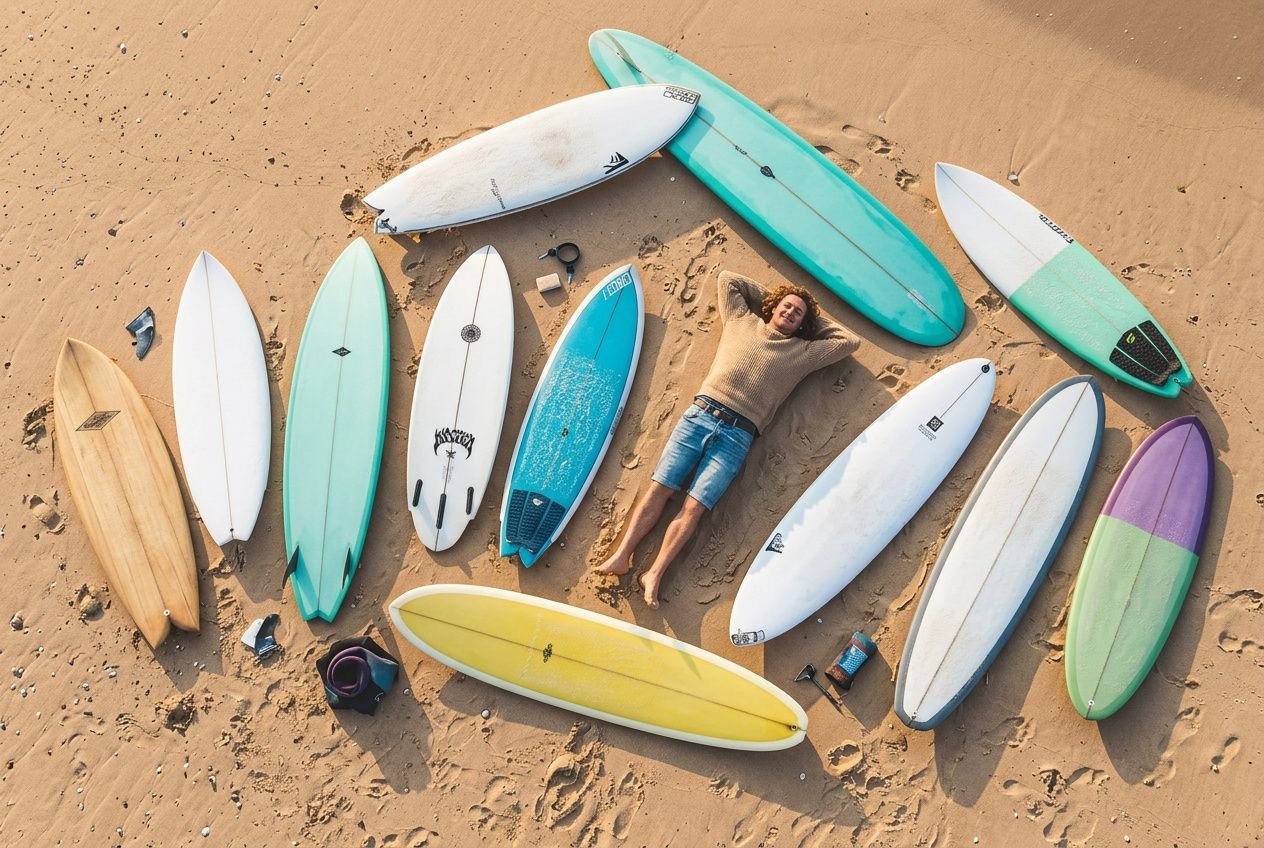
Buying your first surfboard sets the tone for your early sessions. Get the choice right and you catch more waves, build confidence, and enjoy the learning curve; get it wrong and paddling turns into hard work before your feet even move. Mundo-Surf keeps a broad range in stock, with beginner surfboard options across every main shape in the catalogue, so you can choose your first surfboard without narrowing yourself too soon.
Why the right first board changes everything
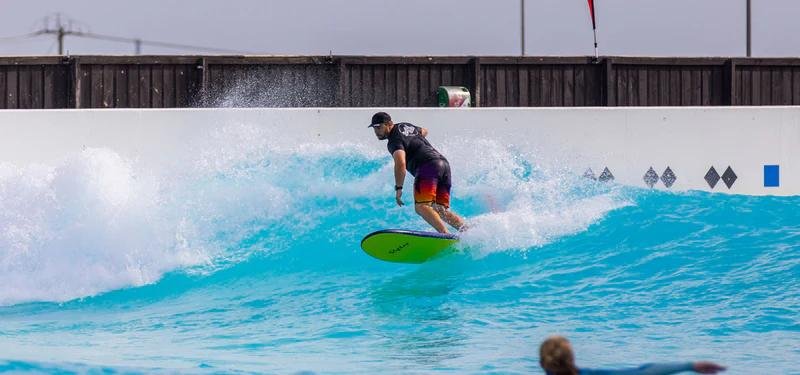
Buying a surfboard for beginners starts with your real level of experience, not the board someone advanced happens to ride. The right choice when you are learning is simple: enough foam, enough length, and a forgiving shape that helps you paddle, stand up, and stay balanced.
In practice, that means more waves caught per session and better stability from the start.
Core dimensions every beginner must understand
From there, what to know about your first surfboard comes down to four dimensions: length, width, thickness, and volume. They work together, and no single figure tells the full story. The surfboard volume guide is worth knowing before you buy if you want to see how those numbers affect buoyancy and paddling in real terms.
- Length: Longer boards, typically 8 feet and above, give you the paddle power and stability most beginners need to catch waves consistently.
- Width: A wider deck, around 22 to 24 inches, improves balance during the pop-up and makes the board feel steadier side to side.
- Thickness: More thickness increases volume and buoyancy, helping the board sit higher in the water and making paddling easier.
Building on that, volume is often the clearest overall marker of suitability. Two boards can share the same length and still feel very different under you because width and thickness change how much foam is packed into the shape: on the water, that matters.
How local conditions shape your board choice
Once the dimensions make sense, local conditions should guide the final call. Your weight matters, but so does what you surf in and where you surf it. Cold water, a thick winter wetsuit, and inconsistent beach-break conditions all push you towards more foam, more buoyancy, and often a wider, more stable beginner surfboard.
By contrast, in warmer water and cleaner waves with a predictable shape, you can sit more comfortably in the middle of your recommended range. The difference comes down to matching the board to your actual sessions, not to an idealised version of surfing based on someone else’s experience.
As soon as that is clear, your first-board priorities get simpler. If you are buying your first surfboard, stability and paddle efficiency in everyday conditions should outweigh any other consideration.
How to choose a surfboard for adults starting out
Adult beginners do not fit one mould. You see a much wider spread of body types and fitness levels here than in almost any other group, so sizing needs to be precise. A board that feels easy under a 68 kg rider can leave someone at 92 kg working hard for every wave. The right choice when you start is the one that matches where you are physically now.
Sizing by height, weight and fitness level
Choosing your first surfboard starts with three markers: your height, your weight, and how often you actually surf. A simple guide works well at the start: choose a board around three feet longer than you are tall. For someone between 5'8" and 6'0", that usually points to an 8'6" to 9'0" longboard.
Building on that, fitness changes the volume you need. If you surf once a week, add roughly 20% to your baseline volume; if you surf four times a week or more, no adjustment is usually needed. Weight matters just as much: above 85 kg, you should be looking at 8'0" or more, with at least 75 litres. For riders in the 50–70 kg range, a beginner surfboard with a modern egg shape makes sense.
| Adult weight | Board length | Volume range |
| Up to 75 kg | 7'0" – 7'6" | 50–60 litres |
| 75–85 kg | 7'6" – 8'0" | 60–75 litres |
| 85 kg and above | 8'0" or larger | 75+ litres |
Longboards vs mini mals for adult beginners
That gives you the size range. The next step in how to choose a surfboard for adults is deciding between a longboard surfboard and a mini mal. Both work well, but it really narrows to how much board length you want to manage on land and in the line-up.
A longboard, generally over 9 feet, gives you maximum stability and easier paddle power. On the water, that matters for heavier adults and for anyone surfing less often. A mini mal, usually 7'6" to 8'6", keeps the wider outline and rounded nose but feels easier to carry, store, and turn.
Once you are up and riding regularly, a mini mal can be the right choice when you want one board that still forgives mistakes yet leaves room to progress. The same logic applies to the funboard category, which often sits in that middle ground. For many adults in the 70–85 kg range, the funboard approach hits the same balance at a slightly shorter length.
By contrast, a full longboard maximises paddle power and stability; a mini mal trades a little float for easier transport. Worth knowing before you buy: the better fit usually comes from volume and outline first, then the label printed on the board.
Why a foamie is the ideal beginner surfboard
A foamie is the cleanest way into surfing. For a complete beginner, the mix of buoyancy, stability and forgiving construction strips away a lot of what makes the first sessions harder than they need to be. In practice, that means easier paddling, more waves caught, and fewer heavy knocks while you build experience.
That same logic explains why experienced surfers still keep one around. In weak or messy conditions, a foamie surfboard stays buoyant, paddles early, and keeps the session fun when a hard board feels like work.
What makes soft-tops safer and more stable
If you are choosing a surfboard for beginner adults, safety and stability come first. A soft board uses a polyethylene foam deck that takes the sting out of falls and collisions, while a hard board in fibreglass gives you far less forgiveness over a full season of learning.
- Soft top deck: Absorbs impact during falls, reducing the risk of cuts and bruises from board contact.
- EPS foam core: Delivers high buoyancy and keeps the board sitting high in the water for easier paddling.
- Harder polyethylene base: Provides sufficient rigidity for directional control without compromising the board’s overall softness.
- Internal structure: Boards with solid internal rigidity resist flex, allowing you to set the rail and hold a line even at beginner speed.
Once safety is covered, shape starts to matter. Rocker, the curve from nose to tail, needs enough lift to limit nose-diving on take-off, especially in beach break conditions; but if there is too much, you lose paddle power. The right beginner surfboard finds that balance.
Foam vs epoxy vs polyurethane construction
A foamie sits at one end of the range, while epoxy and polyurethane hard board constructions sit at the other, separated by buoyancy, durability, and the demands they place on you as your experience grows.
- Soft-top foam: Highest buoyancy for the volume, safest on impact, most affordable at entry level, and highly durable with minimal ding risk.
- Epoxy construction: More ding-resistant than polyurethane, more buoyant for equivalent size, and typically more affordable at beginner price points.
- Polyurethane: Heavier and less buoyant than epoxy, more susceptible to dings, and requires more careful handling throughout its lifespan.
- DURA TEC: A reinforced construction using polyethylene blown into an aluminium mould and filled with polyurethane, producing boards with strong durability for progressive use.
As soon as you start outgrowing a soft board, epoxy usually makes sense first. It bridges the gap between a foamie surfboard and a more performance-led hard board without punishing small mistakes in paddling or take-off timing.
By contrast, polyurethane suits surfers who already know exactly what they want underfoot. It is worth knowing before you buy: this construction asks more of you if you are still learning to paddle cleanly and read changing conditions.
Choosing the right foamie shape and fin setup
Building on that, shape decides how easy the board feels at low speed. Among surfboard shapes, a foamie with a wide nose, wide tail, and rounded or egg outline gives you a more stable platform, with generous planing area and buoyant support under the chest. It is the right choice when your priority is catching early waves and building confidence fast.
Fin setup then fine-tunes the ride. Many soft board models come as thruster, quad, or 2+1, and for a complete beginner the 2+1 often feels the most stable and predictable: one larger centre fin, two smaller side fins. Once your paddling and pop-up improve, you can test other surfboard shapes and fin layouts on the same foamie without changing the whole board.
Understanding surfboard volume for your first board
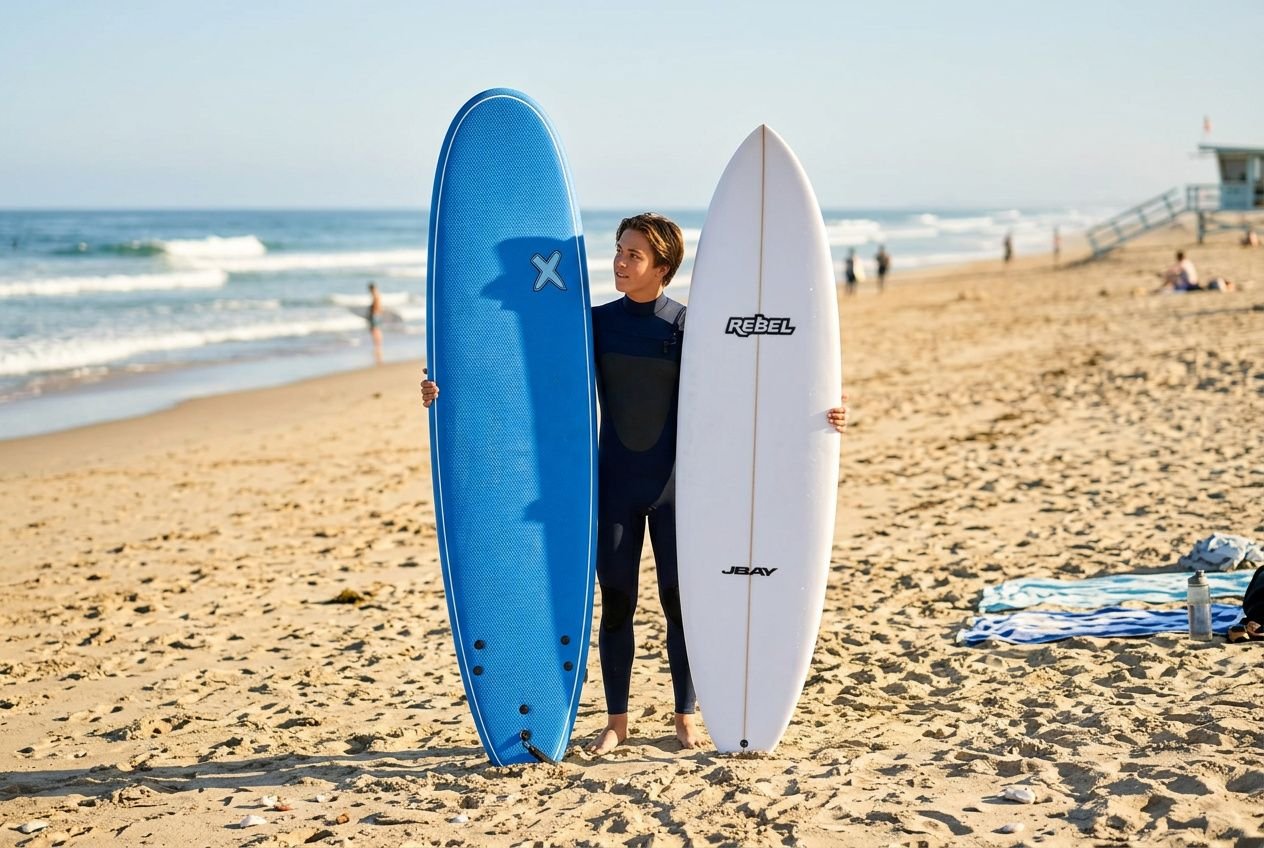
Volume is the spec that matters most when you choose a beginner board, yet plenty of surfers still fixate on length first. Measured in litres, it controls how the board sits in the water, how easily you paddle, and how much forgiveness you get once the wave lifts you. Get it slightly wrong and your wave count drops fast.
How to calculate the volume you need
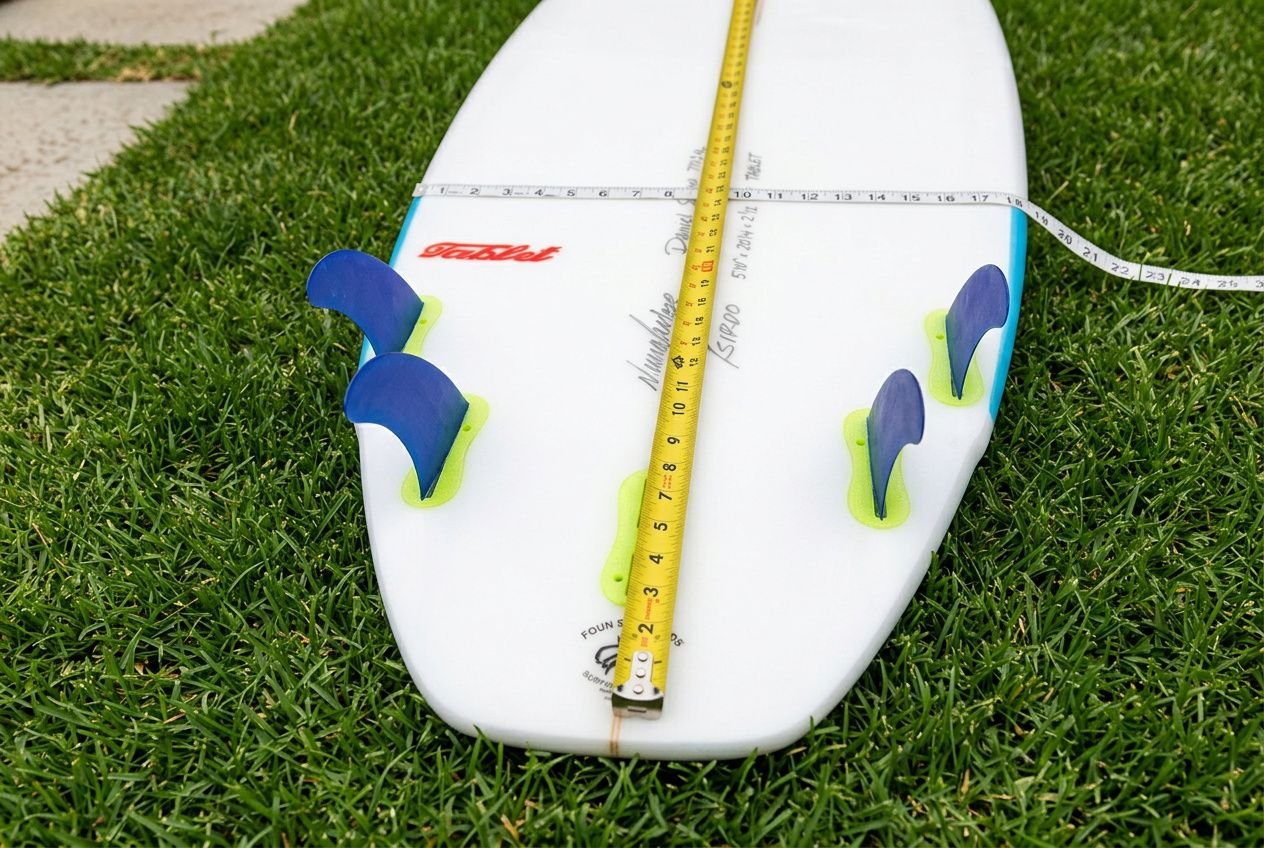
The quickest check is simple: read the volume printed on the stringer. If you want to estimate it yourself, multiply length (in inches) by width (in inches) by thickness (in inches), then apply a shape factor: 0.54 for high-performance shortboards and 0.60 for thicker designs, then divide by 61.02 to convert to litres. Rocker and rail taper can fine-tune the result.
Once you have that baseline, fitness changes the number. Surfing once a week usually means adding 20%, because lower baseline fitness and weaker paddling efficiency need more foam to support entry; three sessions a week calls for roughly 5% on top of your base, since regular practice narrows the gap.
Board family is the next check. A longboard or funboard typically sits above 60 litres, while a mid-length carries its foam through the chest for easier entry and a more stable feel. Shortboards typically land between 22 and 35 litres, which makes them the right choice when you are no longer learning.
Guild Factor and weight-based volume ranges
That baseline becomes clearer once you use the Guild Factor calculation. Divide the board volume by your body weight in kilograms: for a 70 kg beginner, 65 to 75 litres gives a Guild Factor of 0.40 to 0.50, while a 90 kg beginner usually needs 80 to 95 litres. On the water, that matters because the board has to support paddling and deliver stable take-offs, not just float.
As your experience grows, the ratio comes down. A 70 kg intermediate surfer tends to work in the 55 to 65 litre range, and an advanced surfer of the same weight can drop to 35 to 45 litres. The difference comes down to control and efficiency: lose volume too early and progression often stalls at the beginner-to-intermediate stage.
Why volume distribution matters as much as total litres
The shape decides where that foam sits, and that changes how the board feels from the first paddle to the take-off. Volume pushed into the nose and mid-section makes entry easier and keeps the board more stable under your chest.
By contrast, foam carried further back towards the tail sharpens the pivot and suits more advanced surfing. For beginner surfers, it usually works against timing rather than helping it.
Even a three-litre gap can change the session. Less volume sinks the rail deeper and suits tighter turns on steeper faces, while more volume keeps the board higher in the water for a forgiving ride that lets you build technique instead of fighting to survive each take-off. The same logic applies whether you are comparing a funboard, a mid-length, or checking the surfboard volume beginners should target for a first shape.
Progressing beyond your first beginner surfboard
Your next board should suit the surfer you are today. Not the surfer you hope to be in six months. Progress in surfing is measurable, and it comes when your equipment keeps pace with your level rather than forcing a jump before the basics are solid.
The three-stage progression every surfer should follow
Beginner surfboard progression tends to follow three clear stages, and most stalls happen when you skip one. Each step builds on the last: respect it and you keep moving, rush it and your wave count drops.
- Stage 1, Foamie or longboard: Build paddling strength, pop-up timing and wave reading on a buoyant, stable platform with plenty of volume. Start in whitewater, then move into unbroken green waves.
- Stage 2, Funboard or mini mal: Keep useful volume while adding a shape with more rail engagement and better response. This suits you once you are riding green waves regularly and starting basic turns. For around 90% of surfers moving on from the foamie, the right size sits somewhere between 7'2" and 8'6".
- Stage 3, Shortboard progression: Start with a fuller, wider daily driver or groveller rather than a high-performance shortboard, which needs cleaner technique and stronger fitness. Go shorter too early and you usually lose too many waves.
That middle step matters most. A funboard or mini mal sits between the longboard and shorter boards in both length and volume, so the difference comes down to control without giving away too much paddle power. It is also easier to duck dive than a full longboard, which starts to matter as soon as the waves get steeper.
When to move from a foamie to a hard board
Once that three-stage path is in place, the move to a hard board becomes easier to judge. Transitioning from longboard or foamie makes sense when you are catching green waves consistently and linking smooth bottom-to-top turns on most rides. If you are still fighting for take-offs, changing boards too soon usually slows everything down.
At that point, look towards an epoxy mini mal or a wider longboard shape. Not a performance shortboard. In practice, this is the right choice when you want more feedback through the rails while keeping the stable, buoyant feel that still supports your paddling and timing.
A thick winter wetsuit adds weight and bulk, so your volume needs often go up once the water gets cold: especially above 4mm neoprene. In those months, a higher-volume soft board can work better than an undersized hard board.
Stock vs custom boards for your next step
Once you know the kind of board you need, stock availability becomes a real factor. Mundo-Surf ships in-stock boards from the warehouse within days, which makes it easier to move quickly when you find the right beginner surfboard, foamie, mini mal or longboard shape.
By contrast, custom boards usually take more than a month to arrive. They do let you fine-tune width, thickness and finish through product customisation fields, which is worth knowing before you buy if your build falls outside normal sizing charts. Mundo-Surf also offers a 100-day return policy, strong stock depth and competitive pricing across beginner shapes.
Frequently asked questions
What is the best surfboard size for a complete beginner adult?
For most adults, the right beginner surfboard size sits between 8'0" and 9'0". You want a beginner surfboard with a full, stable shape, plus a wide nose and tail, because in practice that gives you more glide, easier paddling, and a cleaner platform to learn to surf.
The exact surfboard size still depends on weight: up to 75 kg, 7'0" to 7'6" with 50 to 60 litres can work well; above 85 kg, look at 8'0" or more with at least 75 litres. If you land between two options, go bigger.
Is a foamie good enough to learn to surf properly?
Yes. A foamie is one of the best tools for a complete beginner, because a soft board with plenty of volume gives you a stable platform and keeps the focus on timing, paddling, and getting to your feet instead of fighting the board's shape.
By contrast, experienced surfers still ride a soft board when the surf is weak or messy, which tells you plenty about its value. Move to a hard board once your basics are consistent.
How do I know when to progress to a shorter surfboard?
Once you are catching unbroken green waves consistently and linking smooth bottom-to-top turns on most rides, your experience is starting to support a change. The difference comes down to control: that is usually the stage where a mini mal or funboard makes sense, rather than dropping straight to a shortboard.
Rushing down too early usually cuts your wave count and slows progress, a cost that compounds quickly in those first months.
Recommended products
Share this article: