Shopping Cart
There are no more items in your cart


How to bodyboard without fins: beginner guide


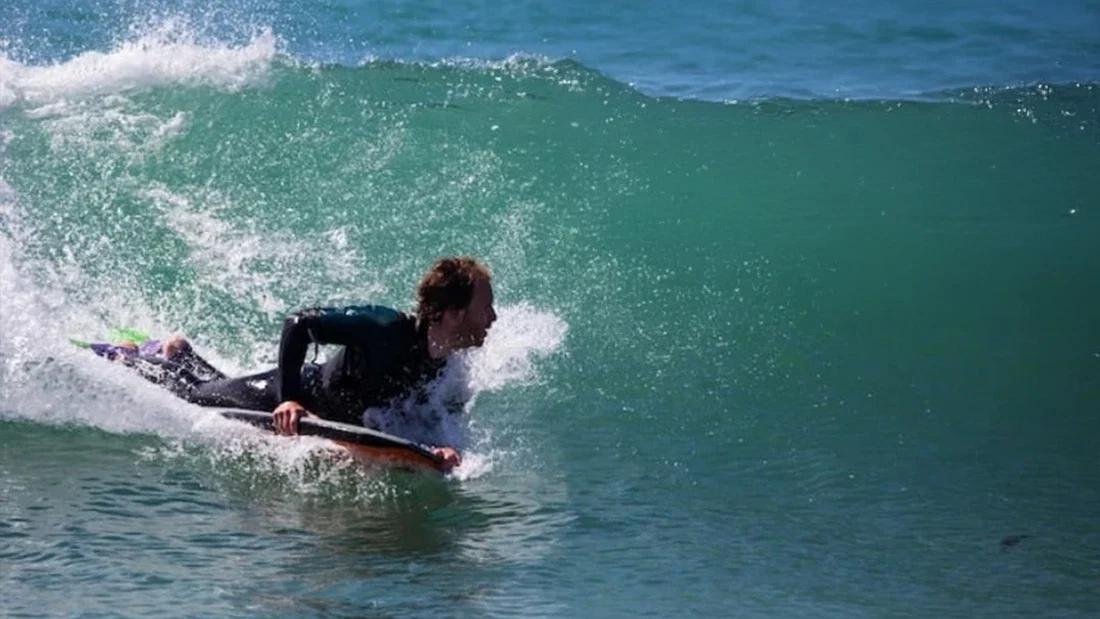
Yes, you can bodyboard without fins, provided you keep to small, already-broken waves close to shore. Your arms then do almost all of the work.
Choose the right waves and practice area
Without fins, the spot you pick matters more than your technique. A finless bodyboarder cannot accelerate hard or change position quickly, so the waves have to come to you gently.
Start with small, broken waves
A beginner can catch small waves that have already broken without swim fins. Reaching waves farther out takes more propulsion than arms alone can give. In practice, learning to bodyboard without fins as a beginner means choosing gentle white water that breaks progressively over sand, not an unbroken wave.
Stay in water shallow enough to stand in comfortably between attempts. A good ride in the shallows is encouraging, but it does not prove you can safely reach deeper waves or get back from them.
Check the conditions on the day
The right setting is a sandy, gently shelving beach with lifeguards and room away from other water users. Even so, a gentle-looking beach can change with the tide, sandbanks, swell direction and wind. Watch several waves before you go in, check the forecast and tide, look for local hazards and ask a lifeguard if anything is unclear.
Forecast numbers need careful reading. The Met Office defines significant wave height as the average height of the highest third of offshore waves. Individual waves can reach roughly twice that height.
Avoid powerful breaks and hazards
Height is only part of the picture. According to the Met Office, longer-period swell can break with more force than short-period chop. Wave height alone cannot tell you whether bigger waves suit a finless session.
Wave shape matters just as much. Steep, hollow or dumping waves can drive you into the seabed, even in shallow water over sand.
The same logic applies to the coastline itself. Reef breaks, rocky points and unfamiliar river mouths are poor places to learn. Keep clear of rocks, groynes and other structures, because a wave can carry you sideways towards them.
Prepare your bodyboard for a finless session
Once you have found the right spot, your equipment has to make up for the missing propulsion. Buoyancy, a secure leash and warm clothing all decide how long you can paddle and stay in control.
Choose a buoyant foam board
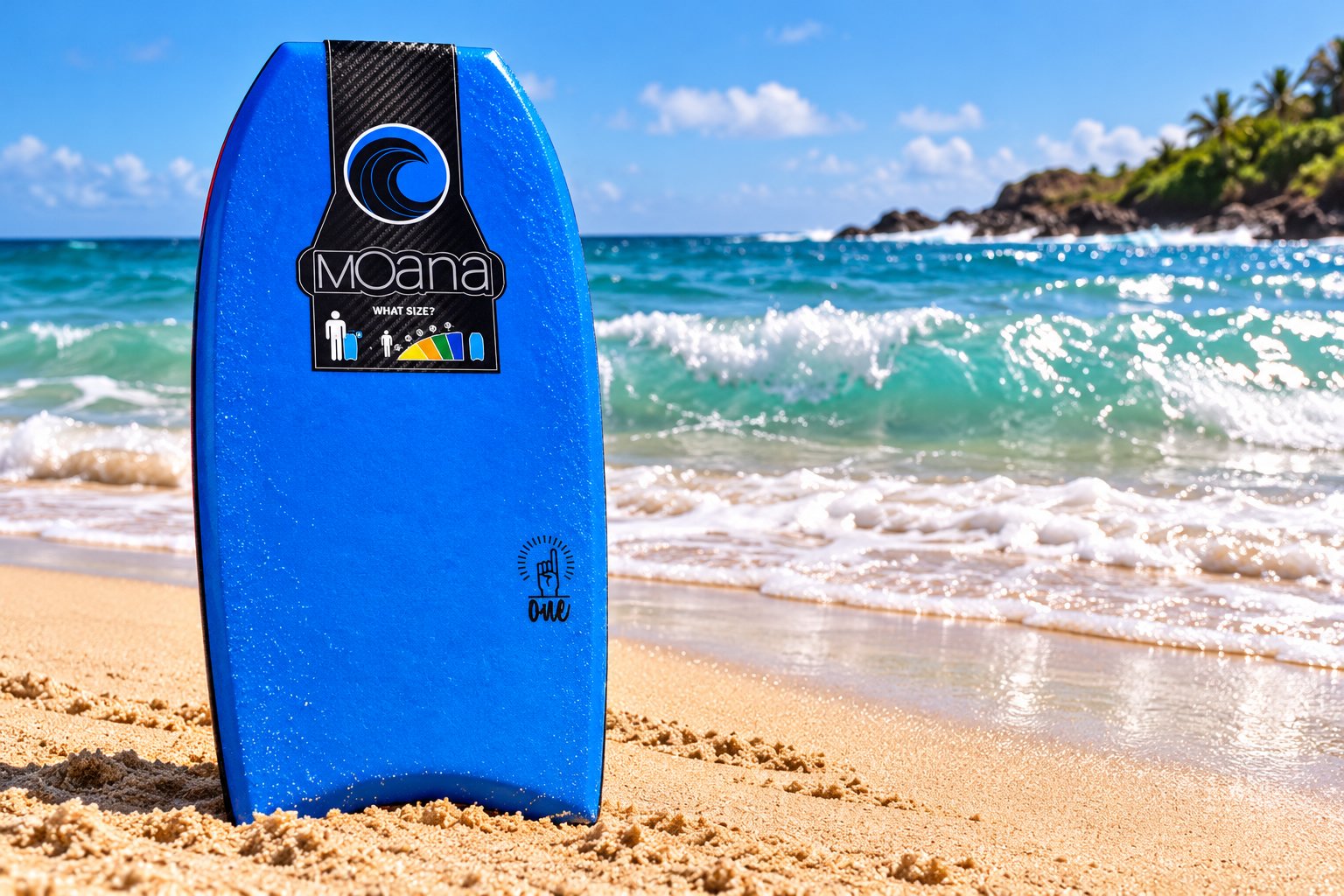
A suitable bodyboard is a buoyant foam board that supports your weight and stays easy to paddle and control. Mundo-Surf recommends the following sizing for beginners:
- Height reference: stand the board upright. Its nose should reach 2–5 cm above your navel.
- Weight first: if you are between two sizes, go by weight rather than height.
- Too small: the board can sink prematurely.
- Too large: you get stability but lose responsiveness.
Choosing the right bodyboard also means looking at its core, stringers (internal stiffening rods), materials and the water temperature. Mundo-Surf sets these factors out alongside its bodyboard range and sizing advice.
Fit and check the leash
A leash connects the board to your wrist or upper arm and helps stop you being separated from it after a fall. We consider it an essential safety item. A bicep leash generally leaves your arms freer while paddling, but the choice between wrist and bicep bodyboard leashes comes down to personal preference.
Before you go in, check the cuff, the cord and the attachment to the board. A leash is not a rescue device. It can also snag on objects, so never wrap it around your neck.
Keep warm and maintain grip
Finless sessions involve long spells of arm paddling, so staying warm matters. A well-fitting wetsuit helps you hold on to body heat in cold water. Choose its fit and thickness for the season and the water temperature.
Depending on the water temperature and how long you stay in, you may also need neoprene boots, gloves or a hood.
Grip is the last check. Bodyboard wax can improve grip where your hands and forearms touch the nose and rails. You can skip it if the board already gives you enough traction.
Lie, paddle and catch your first wave
With the board ready, your body position and arm paddling become your only engine. A balanced position comes before any attempt at speed.
Find a balanced prone position
Lie prone along the centre of the board, with your chest near the nose, hips supported and legs trailing behind. Hold the front rail on each side (the rails are the board's side edges) with your elbows bent, and lift your chest and head enough to see ahead. Then shift slightly forwards or backwards until the board floats level: too far back lifts the nose, too far forwards can bury it.
Paddle before the white water arrives
Before trying a wave, practise moving and turning the board in calm, shallow water. Without fins, arm paddling supplies most of the propulsion, as noted above.
Timing makes up for the lack of power. Use controlled strokes and start paddling before the white water reaches the board. Pace yourself, because repeated effort can tire your shoulders and upper body.
Catch, ride and finish the wave
Point the board towards shore and check that nobody is directly in your path. As the white water reaches the tail, paddle harder for a few strokes. Once the board accelerates, keep your weight centred and let the wave carry you.
Some waves will not pick you up. If the board does not accelerate, let the wave pass and reset in a safe position rather than forcing the ride.
For your first rides, hold the rails, look ahead and go straight towards shallow water. When the wave runs out of energy, get off under control and walk back to your starting point if it is safe.
Recommended products
Stay safe on the beach and in currents
Catching white water is the easy part. Without fins, you have less power to get out of trouble, so reading the beach and its currents matters as much as technique.
Follow flags and lifeguard advice
The RNLI recommends choosing a lifeguarded beach, going with a companion, checking conditions and following lifeguard advice. Learn what the flags mean before you go in:
- Red-and-yellow flags: the area set aside for swimming and bodyboarding.
- Red flag: do not enter the water.
- Black-and-white chequered flags: an area for surfboards and other craft, not for bodyboarders.
- Orange windsock: strong or offshore wind, according to HM Coastguard.
Beaches do not all use identical arrangements. Local signs and lifeguard instructions always take precedence.
Recognise and respond to a rip
A rip current flows out to sea. It may show up as a gap in the breaking waves, a darker channel or churning water, although it can be hard to spot from shore.
The RNLI says rip currents commonly flow at 1–2 mph and can reach 4–5 mph. On the water, that matters when your arms are your only propulsion.
If a rip catches you, do not swim straight against it. Stay calm, hold on to your board if you can, raise an arm and shout for help. If you can stand, wade towards shore; if not, the RNLI advises moving parallel to the shore only if you can do so safely.
Know when to stop or call for help
Cold water can impair your movement and judgement, and repeated paddling wears you down. Come out before you become too cold or exhausted.
If someone else is in danger, alert a lifeguard. In an emergency, call 999 or 112 and ask for the Coastguard rather than attempting a rescue you are not trained for.
Know when swim fins will help
Riding without fins teaches you timing and balance. It also shows you where arm power runs out, and that is where fins come in.
Understand what fins change
Bodyboarding fins are worn on your feet, unlike the fins fixed beneath a surfboard. They give you propulsion that arm paddling alone cannot match. That is why we usually pair bodyboards with fins:
- Earlier take-offs: bursts of speed help with catching waves sooner.
- Steering and white water: fins help you steer and push through broken waves.
- Holding position: they keep you placed on the wave face while riding waves.
The RNLI recommends bodyboarding fins for catching waves and swimming against strong currents. Worth knowing before you buy: fins do not guarantee you can escape a rip, and they do not make stronger surf safe for a beginner.
Add fins as your sessions progress
Once small, broken waves feel manageable, fins become more useful for faster waves or for positioning farther out. They are not a reason to skip a safe progression.
Fit comes first: fins should be comfortable, and neoprene fin socks can reduce rubbing. Fin tethers attach the fins to your ankles to reduce losses, which is a different job from the board leash. Mundo-Surf covers these points in its bodyboard fins guide on stiffness and sizing.
Frequently Asked Questions
The RNLI reports that in 2024 its lifeboat crews launched 13 times to bodyboarders in trouble. Its lifeguards aided 1,249 people on bodyboards that year. The figures do not say how many of them were riding without fins.
Some bodyboard leashes have rotating rings, which help stop the cord tangling around your arm after a wave or a roll. Check the cuff, cord and attachment before every session, and never wrap the leash around your neck.
Mundo-Surf advises against drilling through the stringer when fitting a leash plug. Choose a spot for the plug that keeps clear of it.
Share this article: