Bodyboard Wax: How My Approach Has Changed After More Than 30 Years in the Water by Amaury Lavernhe

Since I started bodyboarding in 1995, bodyboard wax has always been part of my equipment. It's one of those accessories that many people consider simple, but in reality, it has a huge influence on how we feel on our board, our level of control, and ultimately, the way we ride waves.

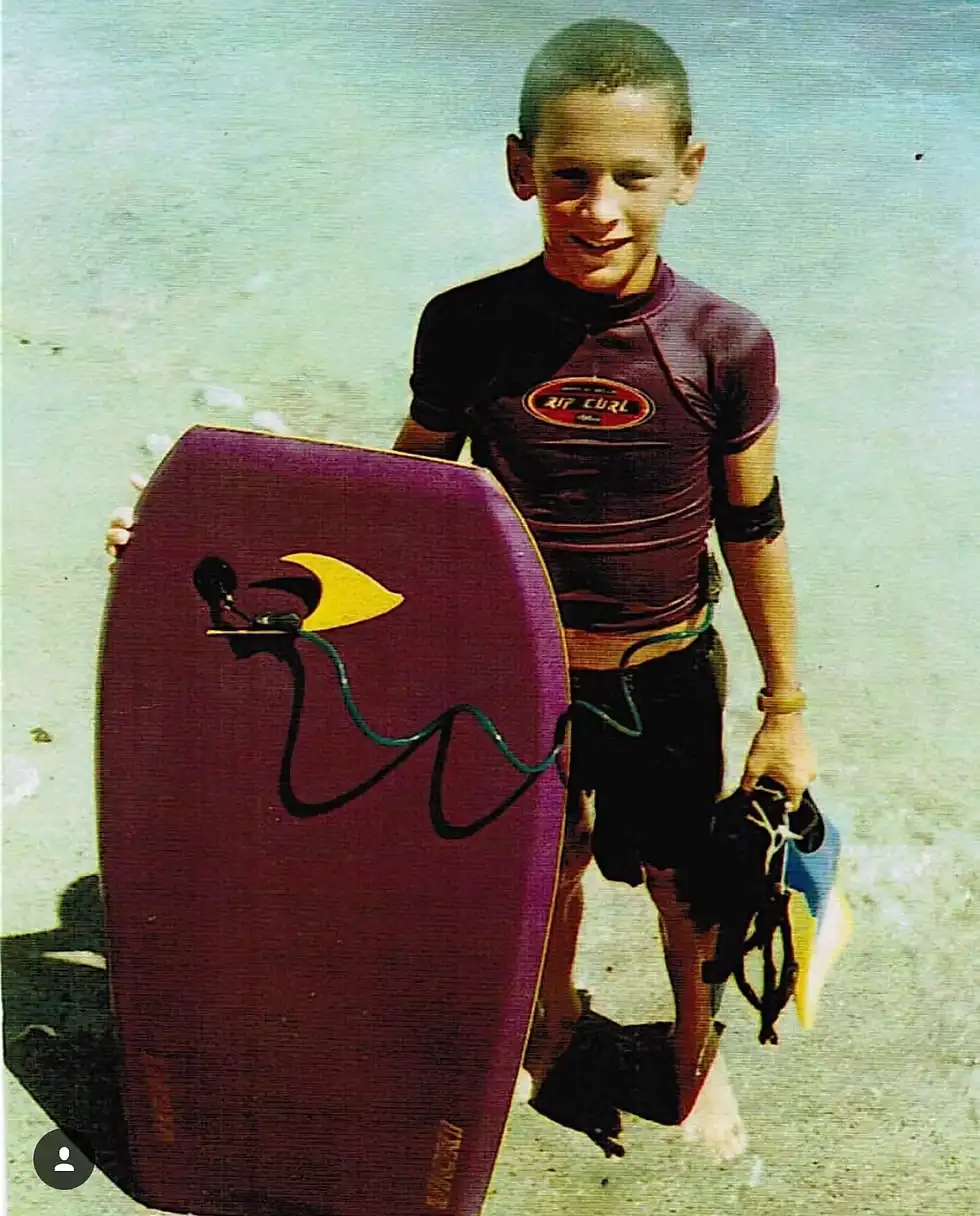
I remember my first years in the water perfectly. Like many young riders, I paid close attention to everything the professionals were doing. I wanted the same fins, the same boards and, of course, the same wax. There was something special about using exactly the same gear as the riders I looked up to. My mother even had to visit several surf shops to find the specific brand I was looking for. Today, I look back on it with a smile, but at the time it was extremely important to me.

Wax wasn't just a tool to improve grip. It was part of a ritual. Applying it before paddling out made me feel more prepared and a little closer to the level I dreamed of reaching one day.

My Early Years: The Stickier, the Better

For many years, I had a very simple idea about bodyboard wax: the more grip it provided, the better my riding would be.

That’s why I was always searching for the stickiest bodyboard waxes on the market. I especially remember a Brazilian wax used by riders such as Uri Valadao. When I finally got the chance to try it, I thought it was incredible. It had an extremely sticky texture, almost like glue. Back then, I was convinced that covering my board with large amounts of bodyboard wax was the best way to improve my control on the waves.

My board would end up completely covered. I applied wax to almost every area that came into contact with my body because I believed it would prevent any slipping.

And for a while, it worked. Or at least, that’s what I thought.

Over the years, I discovered that bodyboarding is much more complex than simply sticking to the board.

The Importance of Mobility on the Board

As my level improved, I began to understand that board mobility is one of the most important technical aspects of modern bodyboarding.

Control does not depend solely on grip. It also depends on our ability to move our body weight quickly and accurately.

We constantly need to move around the board: shifting our weight forward to gain speed, moving it back to control the line, adjusting sideways for maneuvers, or positioning ourselves correctly during turns and aerials.

When there is too much bodyboard wax, that mobility decreases.

Little by little, I realized that a board covered with excessive wax could limit certain natural movements. Instead of helping me, it was sometimes creating a small amount of resistance that affected the fluidity of my riding.

That was when I started paying closer attention to some of the most technical riders on the world tour.

What I Learned from Watching the Best Riders in the World

One of the greatest advantages of competing at the highest level is the opportunity to share sessions, trips and competitions with some of the best bodyboarders on the planet.

While watching riders such as Pierre Louis Costes, Tanner McDaniel and Jared Houston, I started noticing something that really caught my attention.

They used far less bodyboard wax than I did.

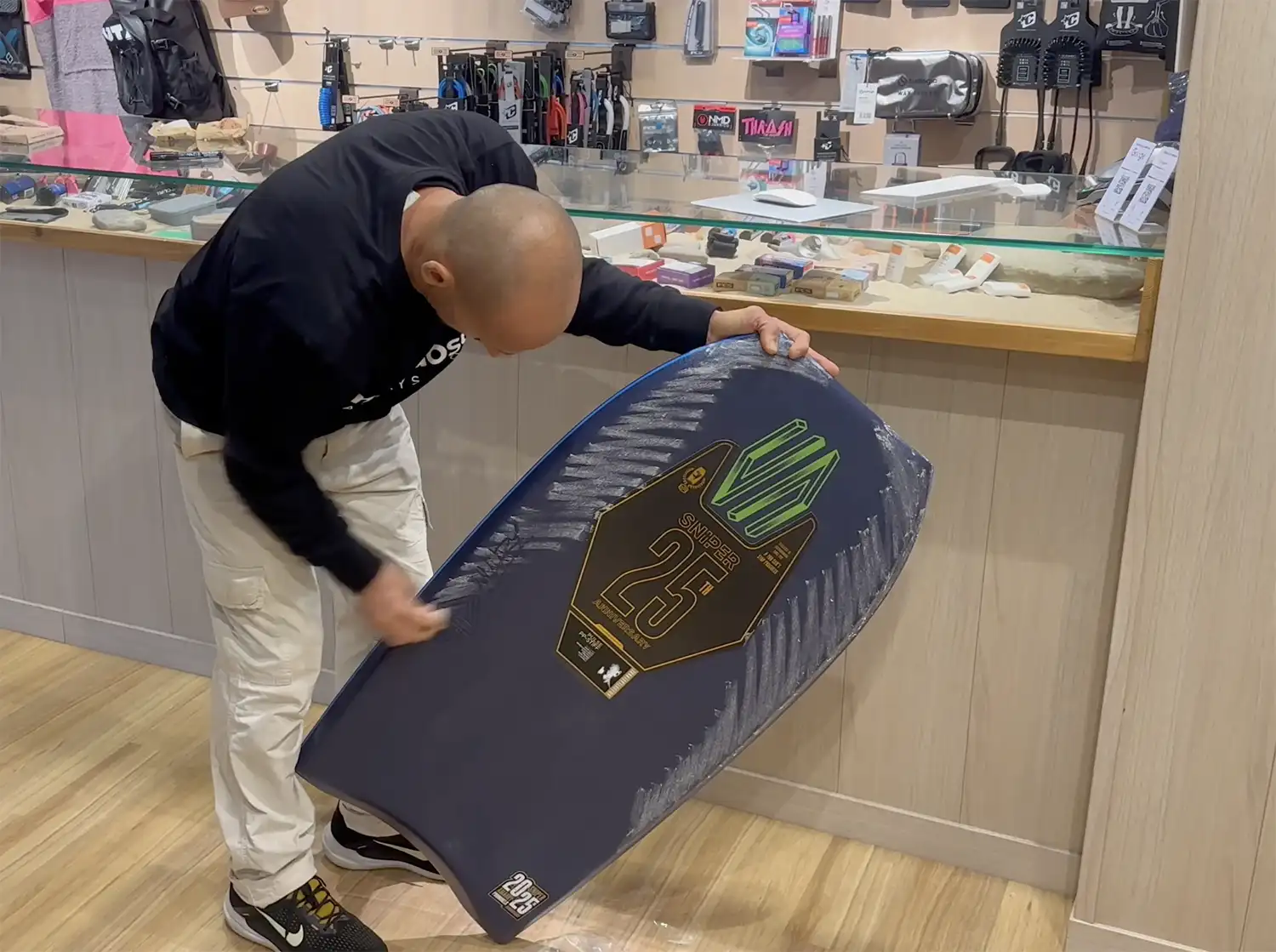
While my board was almost completely covered in wax, they only applied it where it was truly needed, especially on the main hand grip areas.

Their approach was completely different.

They were not trying to stick to the board. They were trying to find the perfect balance between grip and mobility.

That observation gradually changed the way I understood the use of bodyboard wax.

The Arica Final That Made Me Rethink Everything

There is one image I still remember very clearly.

It was during a final in Arica, Chile, in 2015, where I competed against Jared Houston.

After the heat, I had the chance to compare our boards.

The difference was obvious.

My board was covered in wax almost everywhere. Jared's board barely had any.

That visual comparison was a real eye-opener for me.

We were competing at the highest level in the world, on one of the most demanding waves on tour, and one of the most technical riders on the planet was using only a minimal amount of bodyboard wax.

That reinforced an idea that had already begun forming in my mind: maybe I was using more wax than I actually needed.

More importantly, perhaps that extra wax was not helping my performance at all.

How to Choose the Right Bodyboard Wax

After so many years of testing different products in a wide range of conditions, I have come to the conclusion that choosing the right bodyboard wax is much simpler than it seems.

For me, there are two main factors to consider:

  • Water temperature
  • Each rider's personal preferences

Water temperature is probably the most important factor.

Bodyboard waxes are designed to perform within specific temperature ranges, and using the wrong wax can significantly affect its performance.

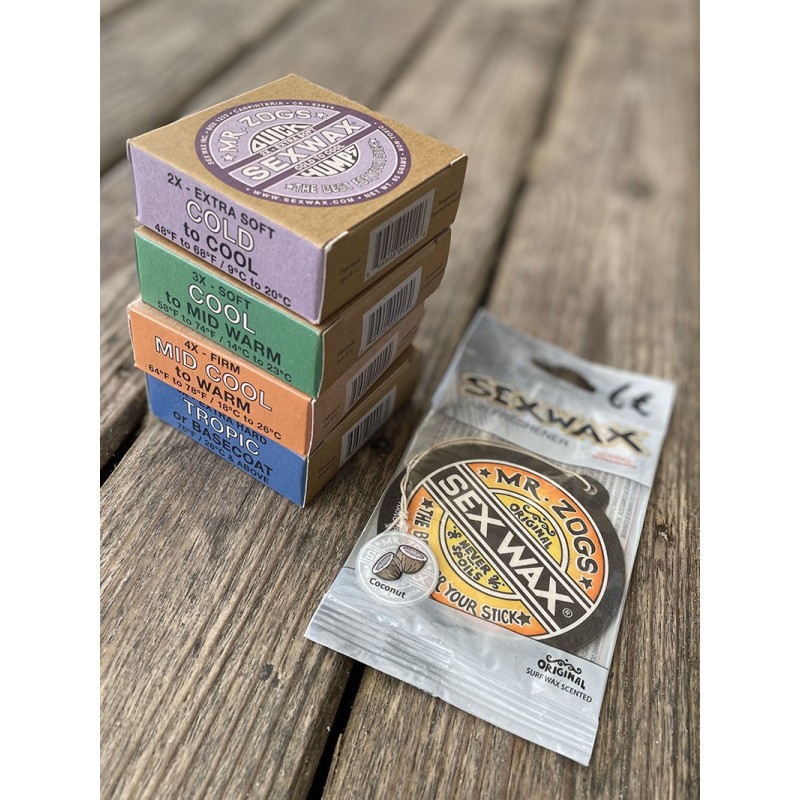
Cold Water Wax

When the water is cold, it is recommended to use softer waxes.

They maintain excellent grip even at low temperatures and preserve the right texture throughout the entire session.

Cool / Temperate Water Wax

Medium-temperature waxes are probably the most versatile option.

They work perfectly in locations where water temperatures remain relatively stable throughout the year.

Warm Water Wax

When surfing in warm water, we need harder waxes.

This prevents the wax from melting too quickly or losing consistency due to heat.

My Favorite Waxes

Throughout my career, I have tested many brands of surf wax and bodyboard wax.

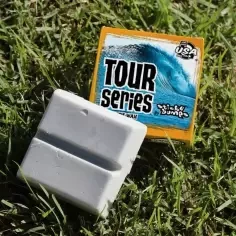
Although there are many quality options available, my favorites remain Sticky Bumps and Sex Wax.

Both offer an excellent balance of grip, durability, and consistency.

What I value most is their predictable performance throughout an entire session. There is nothing worse than feeling your wax completely change texture after a few hours in the water.

However, beyond the brand itself, I still believe the most important factor is choosing the right wax for the water temperature where you surf.

The Canary Islands and France: A Perfect Example

One of the best examples of why it is important to adapt your bodyboard wax to the environment is found in the places where I usually surf.

In the Canary Islands, where I spend a lot of time in the water, temperatures typically stay around 20°C (68°F) for much of the year.

The water is also very clean and conditions tend to remain quite consistent.

For these conditions, I usually use a MID COLD bodyboard wax, specifically designed for that temperature range. It provides exactly the amount of grip I need without becoming too soft or too hard.

In France, however, the situation is completely different.

Depending on the season, water temperatures can range from approximately 10°C to 25°C (50°F to 77°F).

That variation requires you to adapt your equipment.

For that reason, I always recommend having at least two types of bodyboard wax if you surf in regions with distinct seasons: one for cold water and another for moderate or warm temperatures.

It is a small investment that makes a huge difference in terms of comfort, grip, and performance.

How I Apply Bodyboard Wax Today

The way I apply bodyboard wax today is very different from how I did it as a teenager.

Now, I try to use much less wax.

I also prefer waxes that are not excessively sticky.

My main goal is to maintain mobility on the board.

The center area of a bodyboard should allow us to move freely forward, backward, and side to side. That freedom is essential for executing maneuvers accurately and adapting to every section of the wave.

When I get a brand-new board, I usually apply a small amount of bodyboard wax to the center area to help during the first few sessions.

However, after several surfs, I generally feel that it is no longer necessary to keep waxing that part of the board.

One Area Many Riders Forget: The Elbows

There is one detail that often goes unnoticed but that I consider very important.

Your elbows need freedom of movement.

If too much wax is applied in that area, it can slightly restrict movement while paddling or performing certain maneuvers.

For that reason, I try to avoid building up wax where my elbows rest.

Instead, I focus on the areas that are truly strategic.

Mainly on the nose and along the rails, where I grip the board with my hands.

This allows me to maintain excellent grip without compromising overall mobility on the board.

Less Wax, More Efficiency

After more than three decades of bodyboarding, my view of bodyboard wax has changed completely.

I went from believing that I needed to cover the entire board to achieve maximum control to understanding that true performance comes from finding the right balance between grip and freedom of movement.

Bodyboard wax remains an essential part of every session, but using more wax does not necessarily mean surfing better.

My advice is simple: experiment, adapt your wax to the water temperature, and find the amount that best suits your surfing style.

Because in the end, as with many aspects of bodyboarding, there is no universal formula.

What really matters is finding the balance that allows you to feel comfortable, move naturally on your board, and enjoy every wave to the fullest.

See the author's articles
Amaury Lavernhe

Amaury Lavernhe is one of the leading figures in professional bodyboarding worldwide. A two-time World Champion, he has competed for over 20 years on the professional circuit at the highest level, standing out for his power, technique, and in-depth knowledge of equipment and wave dynamics.

Throughout his career, he has traveled to some of the best waves on the planet, gaining unique experience in competition as well as in technical equipment analysis.

In addition, Amaury runs his own bodyboard academy, where he coaches young riders using a methodology focused on technique, safety, and real progression in the water.

He brings all this experience — as an active competitor, coach, and father — to the blog of Mundo Surf, sharing practical advice, technical insights, and performance-based recommendations to help riders of all levels choose the right gear and progress safely.

What our customers think:

4,7/5

Based on 535 reviews

4,6/5

Based on 507 reviews

Product added to wishlist